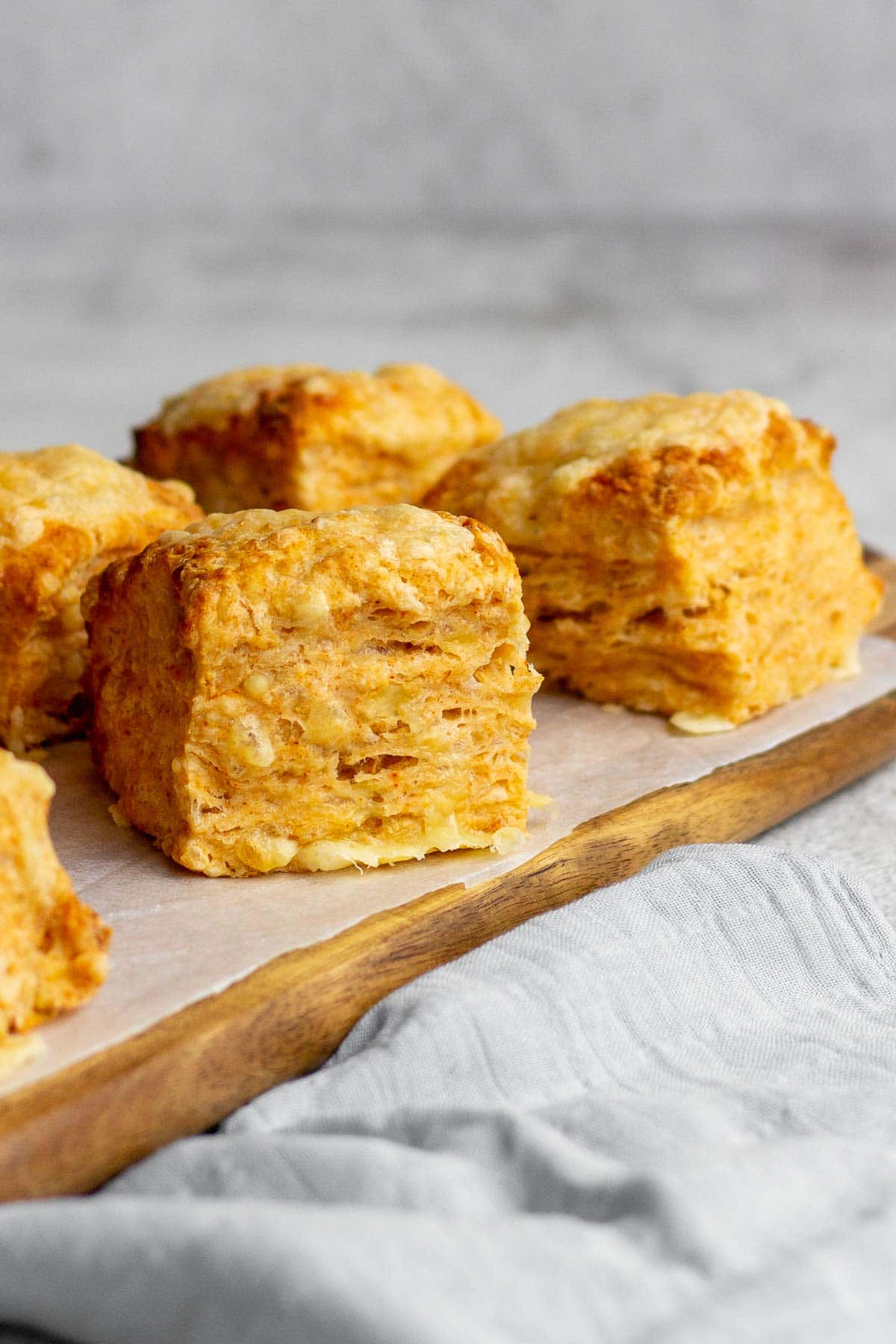
These easy, light, and fluffy cheese scones come together in a matter of minutes. Flavored with cheddar, parmesan, and spices, enjoy these scones hot out of the oven with a smattering of butter.
These are honestly the best cheese scones I have ever had. The best cheeses to use are mature cheddar with some parmesan, however, these are fantastic when made with cheddar cheese only. Additionally, these buttery cheddar cheese scones can be flavored with mustard powder, cayenne pepper, and paprika for a spicy version.
Jump to:
What are Scones?
A scone is simply a baked good that can be either sweet or savory. Scones originated in Cornwall, England but are enjoyed in my home country of South Africa, and are quite popular here in New Zealand and in Australia.
I love savoury scones, whether it's plain cheese like this one or flavored with onions or chives.
A savory scone here is very similar if not the same as a savory biscuit in the USA.
Why This Recipe Works
- This easy cheese scone recipe comes together in 20 minutes and is filled with delicious flaky layers that result in tender scones.
- Light and fluffy cheese scones straight from the oven make for a delicious breakfast or brunch.
- Flaky cheese scones are perfect for an afternoon tea or an addition to the lunch box.
- Because milk is used to brush the tops of these savory scones, it is a completely eggless recipe.
Ingredients
Here are some notes on the ingredients, please refer to the recipe card for full details.
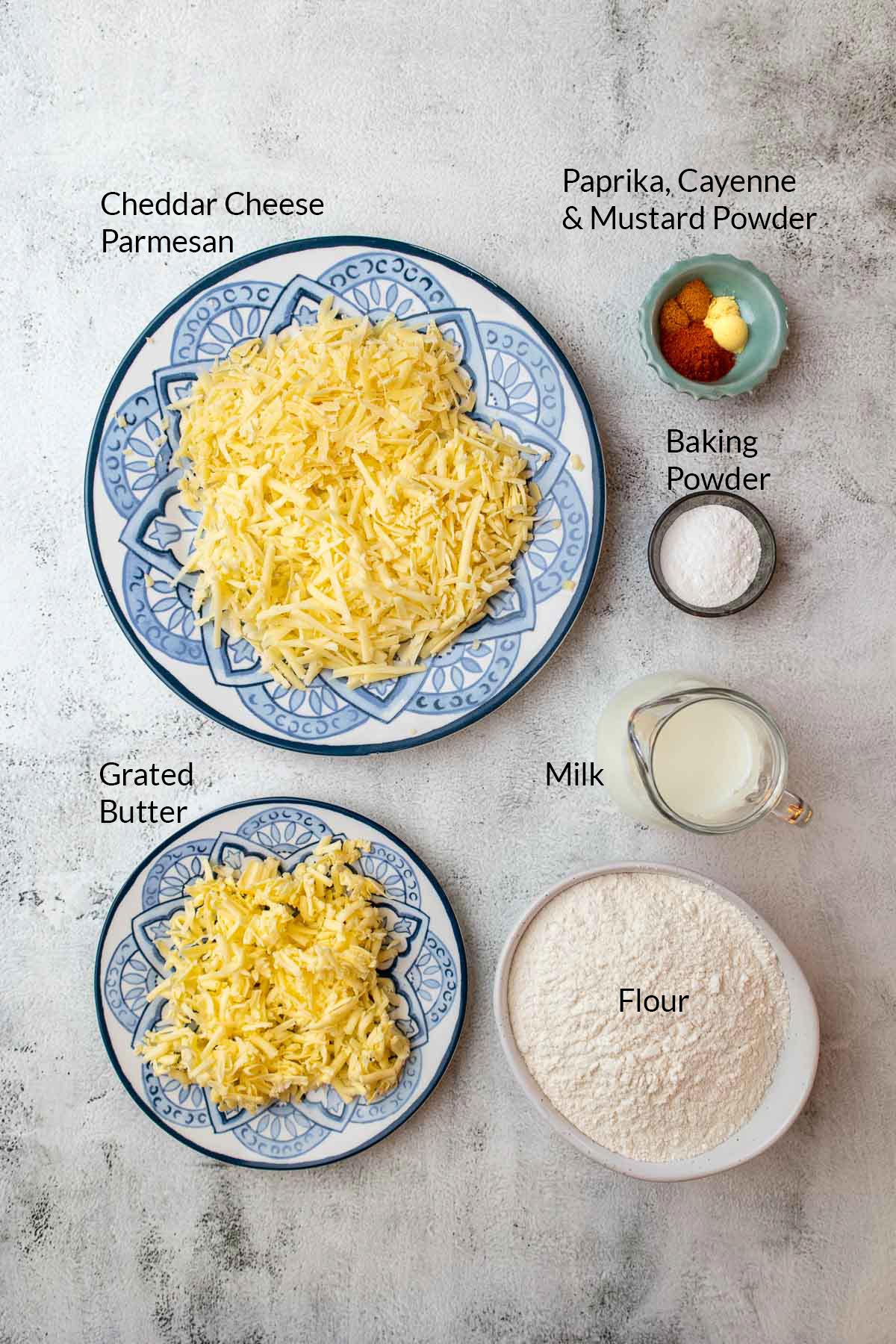
Flour - plain flour, standard grade, or all-purpose flour is used to make these cheese scones.
Self-rising or self raising flour substitute - to make these scones with self-rising or self-raising flour, simply substitute the plain flour with self-rising and leave out the baking powder.
Make sure your baking powder is fresh (especially if you haven't bought some in a while) by placing a ½ teaspoon into a cup or bowl. Pour about a ¼ cup of boiling water over the baking powder. If it foams and bubbles it is still fresh.
Cold Butter (salted) adds flavor and gives a flakey tenderness to the scones. As the scones bake, the steam released from the butter raises the scone (in conjunction with the baking powder) and leads to a flakey, soft, and fluffy scone. Butter adds flavour, softness, and moisture and sometimes aids in the leavening of baked goods. I use New Zealand butter in my recipes, which has approximately 82% butterfat and can be very yellow (similar to European or Irish butter). Butter cannot be substituted with butter or margarine spreads, but it can be substituted with baking margarine.
Parmesan adds a nice strong cheese flavor, but if you don't have parmesan on hand, simply substitute out with cheddar.
Cheddar - preferably mature cheddar or vintage cheddar, but tasty cheese (regular cheddar) will do just fine, particularly when paired with parmesan.
Milk adds moisture to the scones. Whole milk or lower-fat options can be used.
Mustard powder, cayenne pepper, and paprika add a nice depth of flavor and a bit of spiciness to the scones. These are optional and can be left out to make plain cheese scones.
Note - there is no added salt in this recipe because cheese can be rather salty, I opted for salted butter, and the baking powder also contains salt. However, if using unsalted butter add ¼ - ½ teaspoon of table salt.
Weighing & Measuring Ingredients
Weighing ingredients with a kitchen scale is more accurate than using measuring cups. All my recipes are developed and tested using grams only.
However, I have activated the metric-to-cup conversions. Simply click on "cups" or "metric" for your preferred measurements. For these conversions, cups are equal to 240 millilitres/8 fluid ounces, tablespoons are 15 milliliters and teaspoons are 5mL.
Step-by-Step Instructions
NOTE - all ingredients must be cold for this recipe.
Step 1 - Preheat the oven to 220°C/200°C Fan. Line a baking tray or baking sheet with baking paper or parchment paper.
Step 2 - Grate the cheeses, keeping aside approximately 40 grams of the cheddar to place on top of the scones before baking.
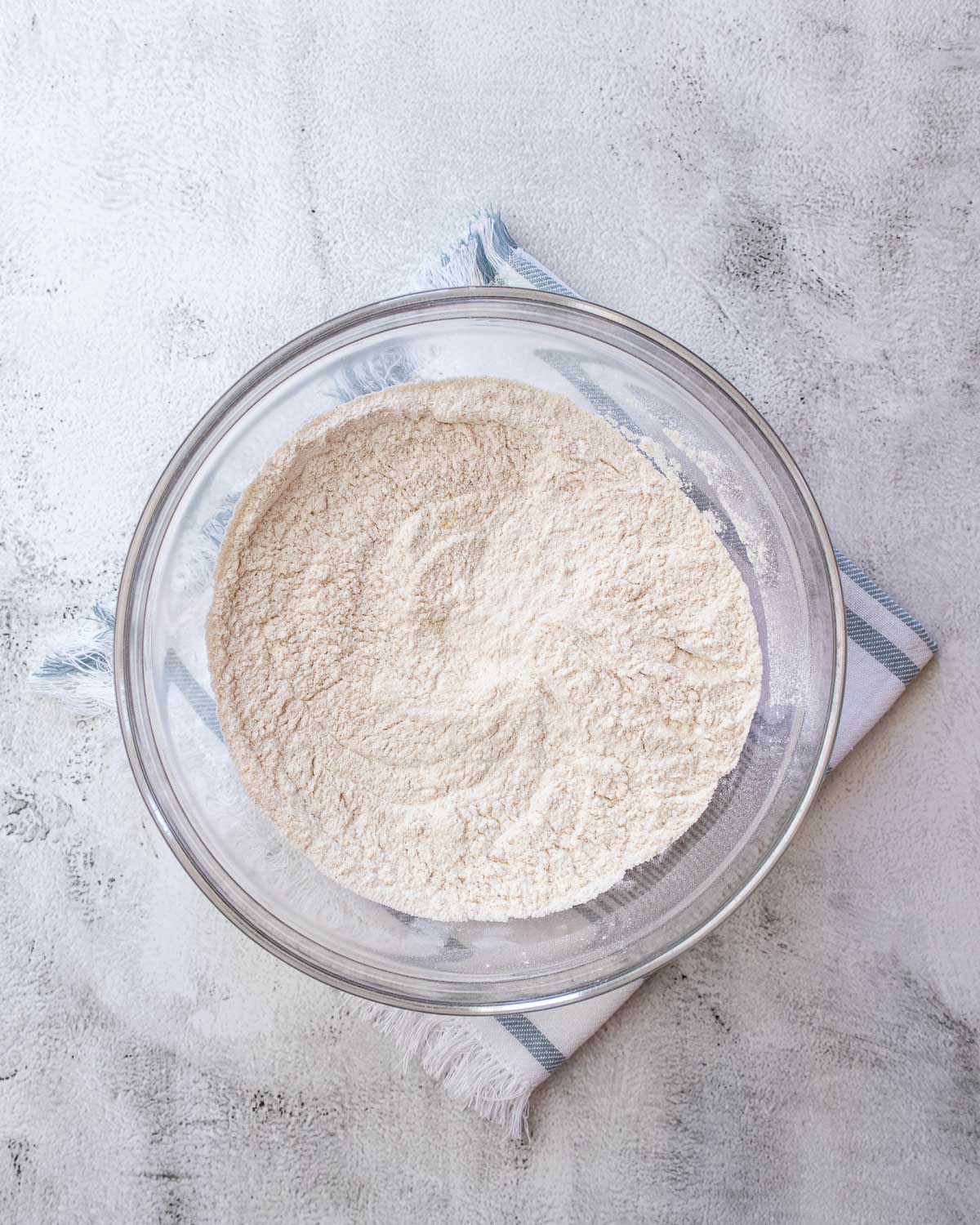
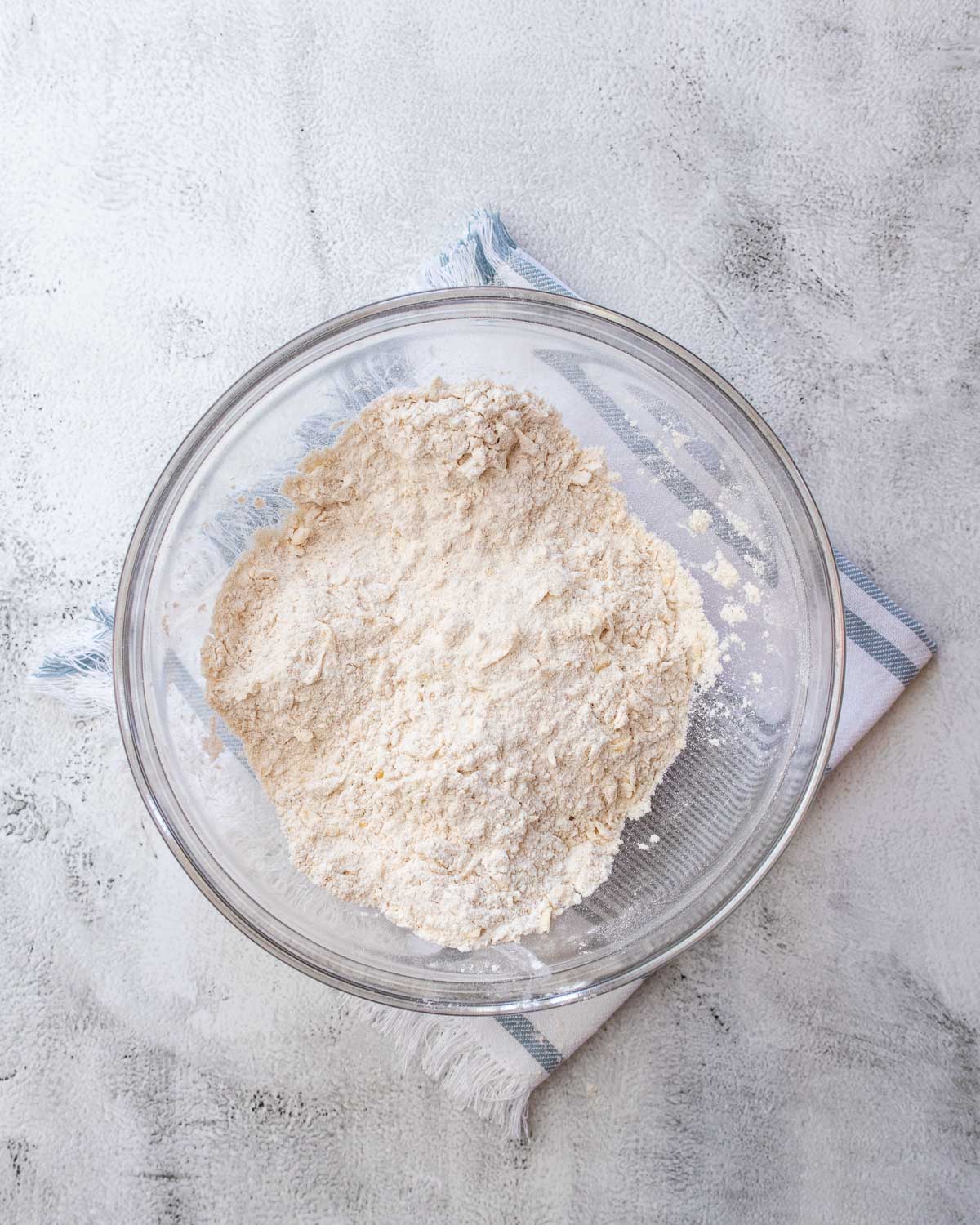
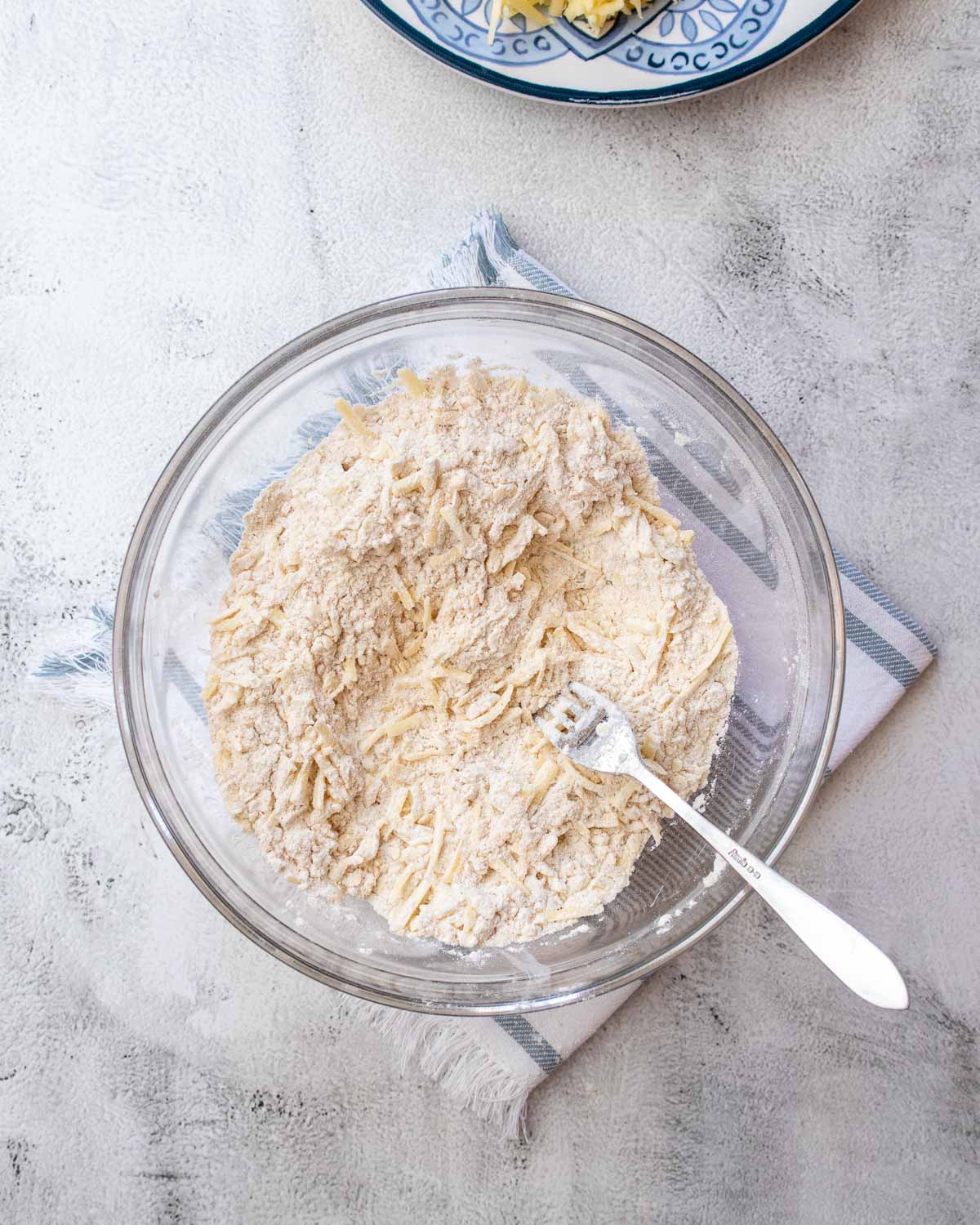
Step 3 - In a large bowl whisk together the flour, baking powder, salt, mustard, cayenne pepper, and paprika. Grate the butter or cut it into small blocks. Rub the butter into the dry ingredients until it resembles fine breadcrumbs with some small pieces of butter scattered throughout the flour (or work the butter into the flour using a pastry cutter). Add the grated cheese into the flour, and mix through with your fingers until well distributed.
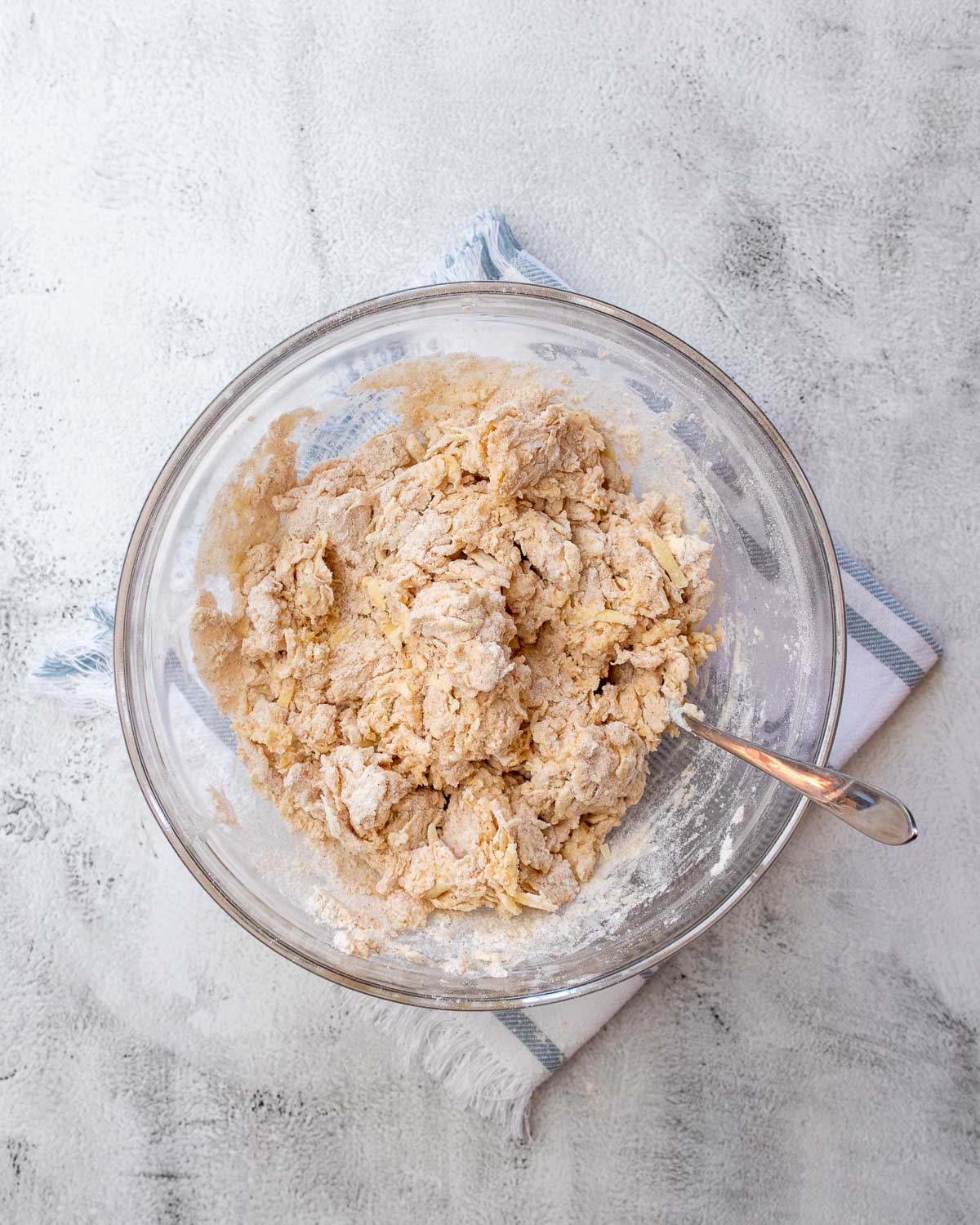
Step 4 - Pour the milk into the flour mixture, using a fork, stir to make a rough dough.
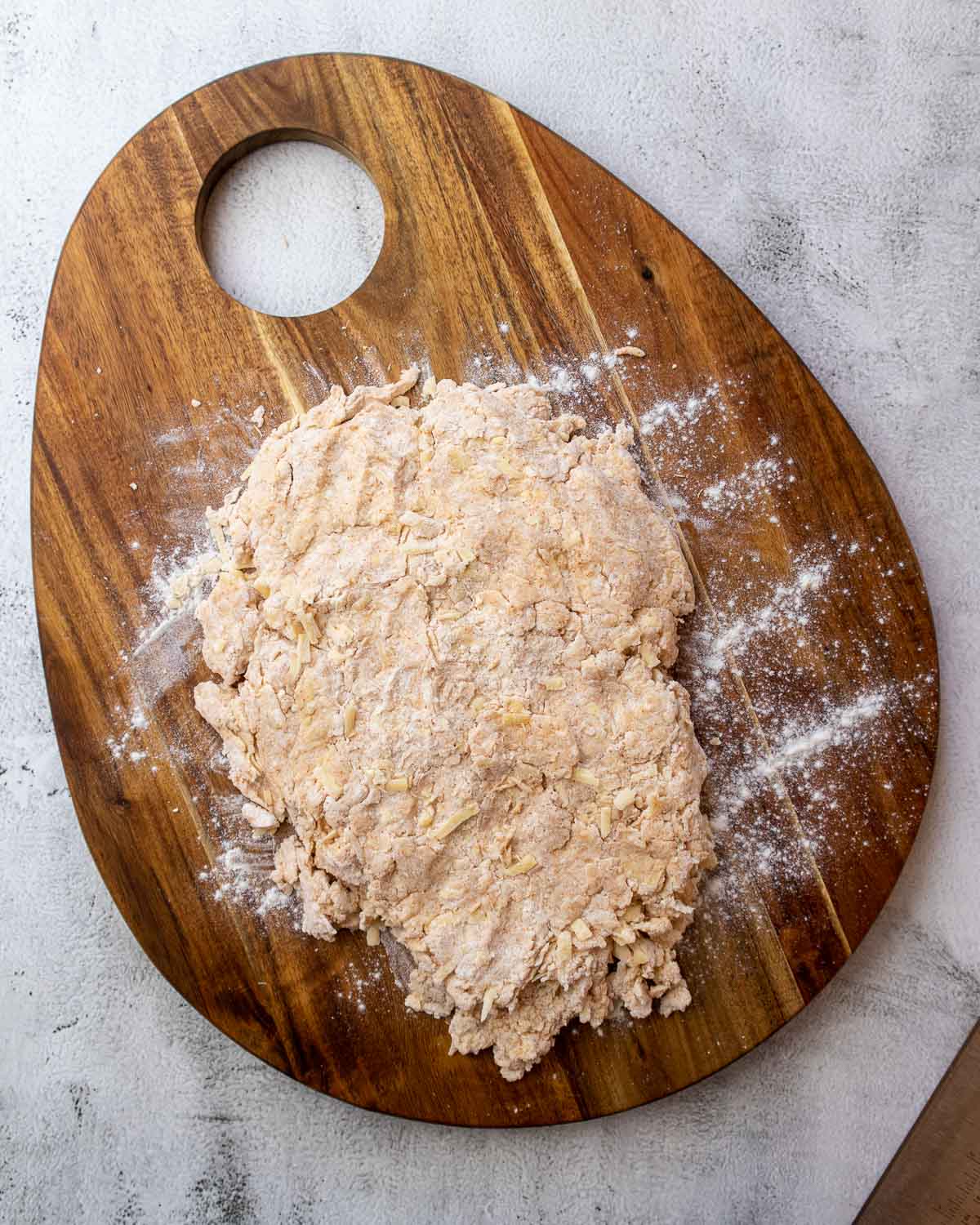
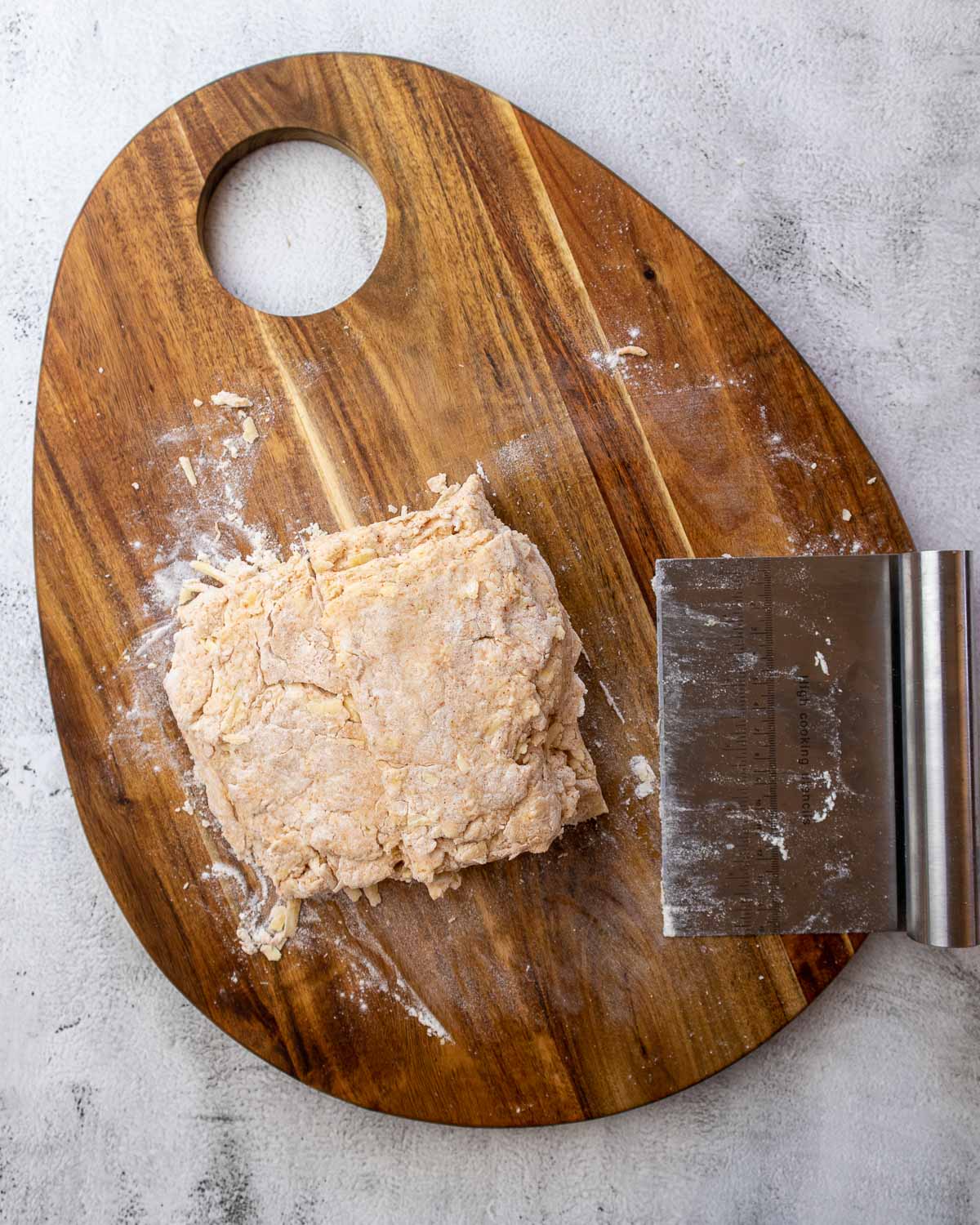
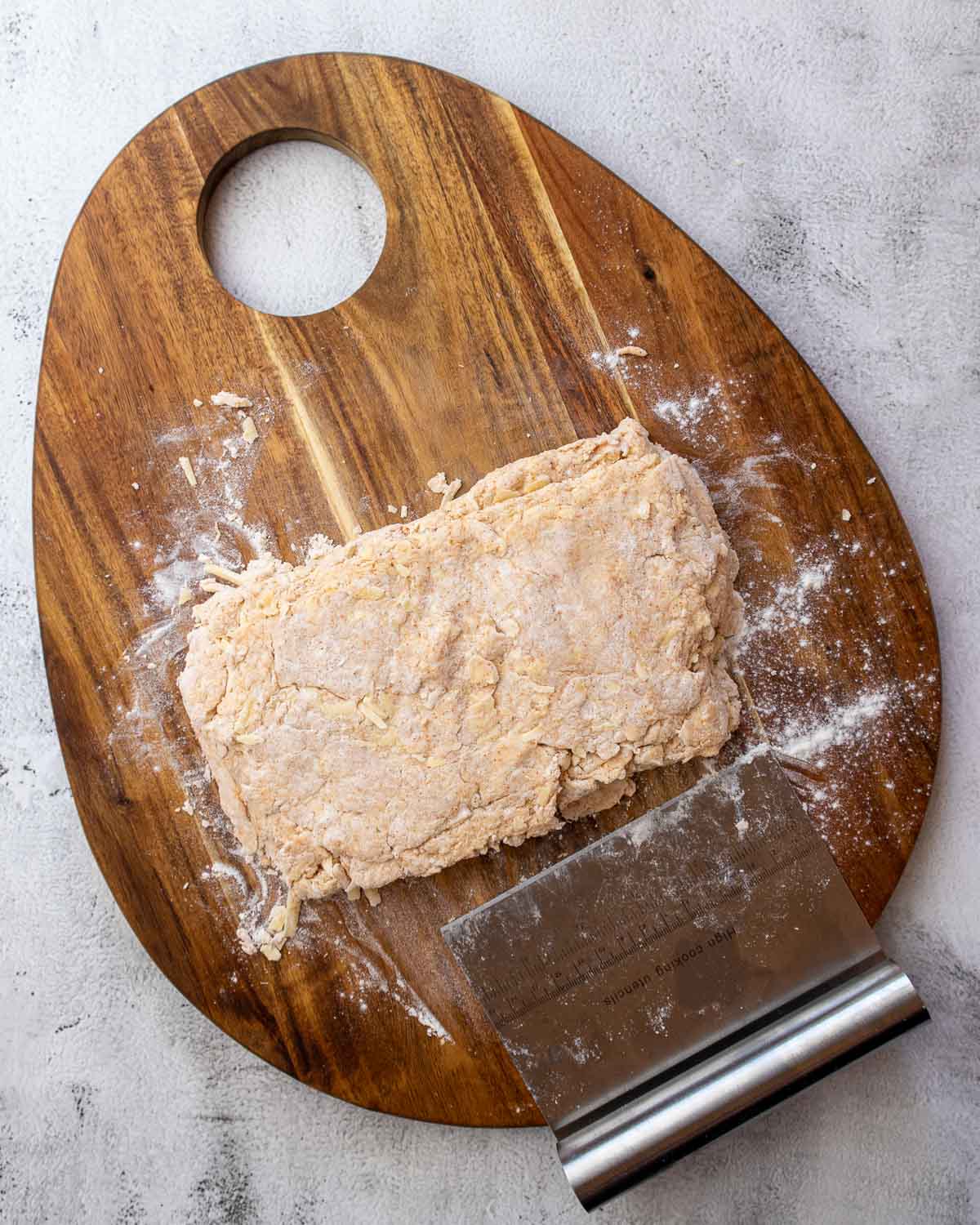
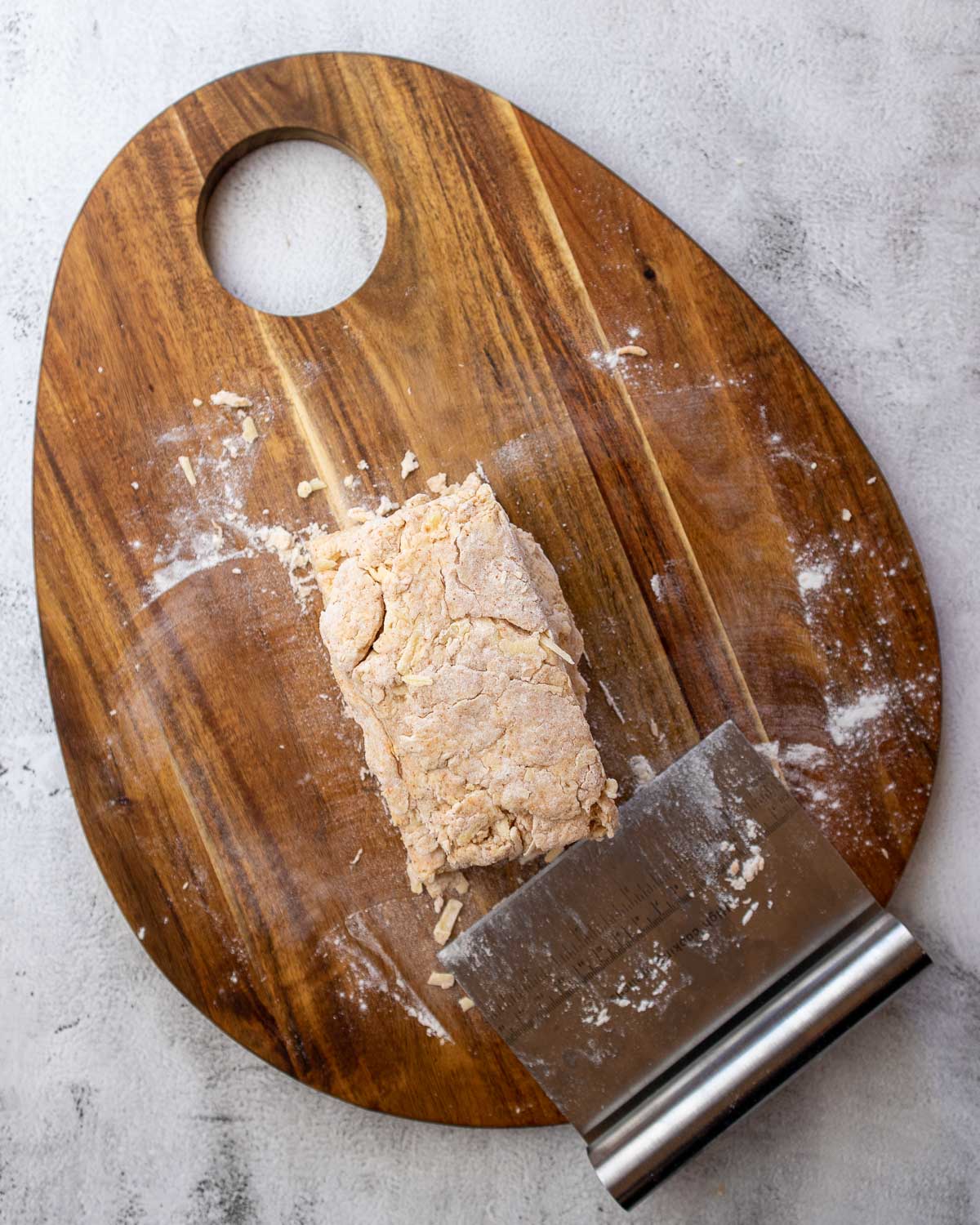
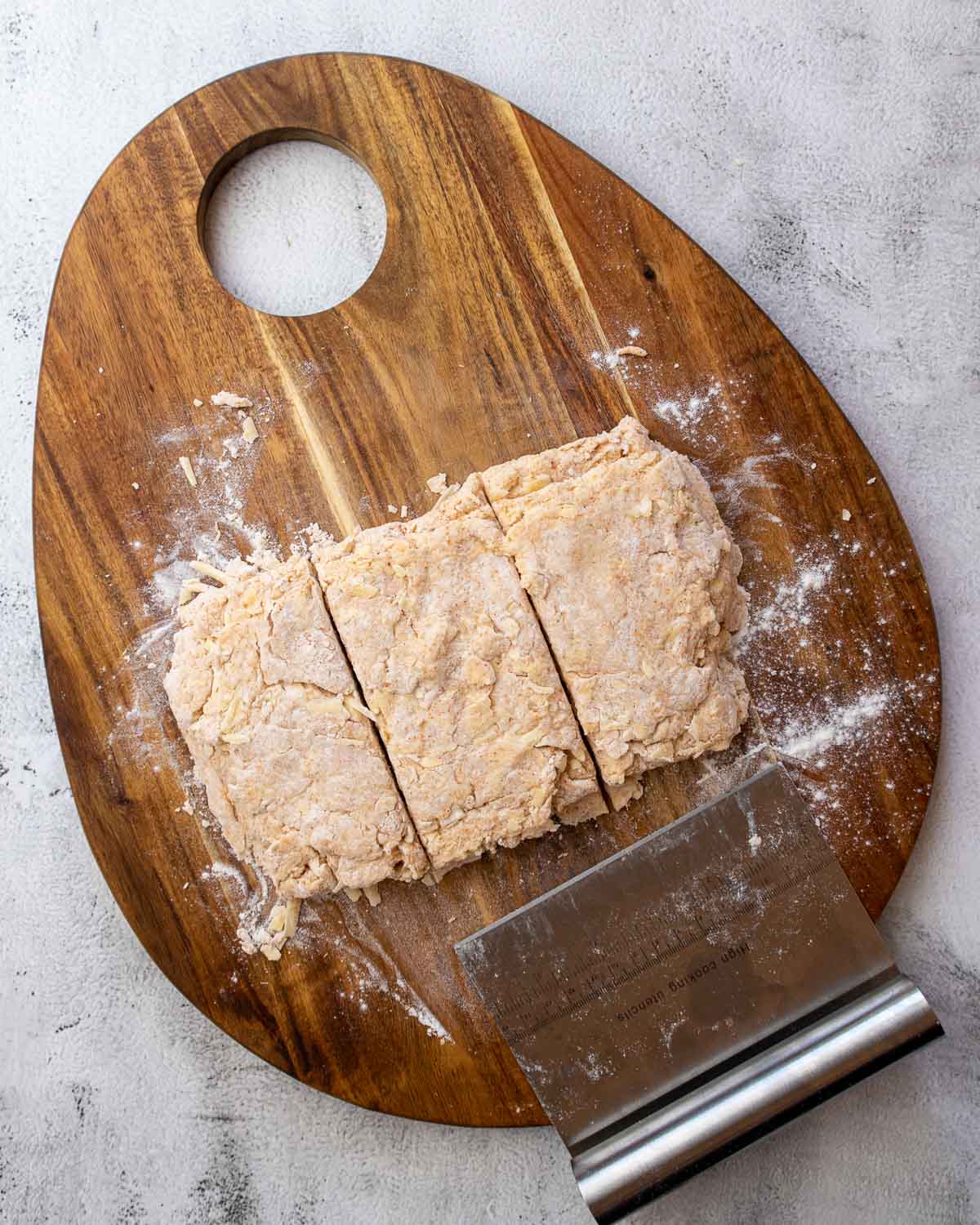
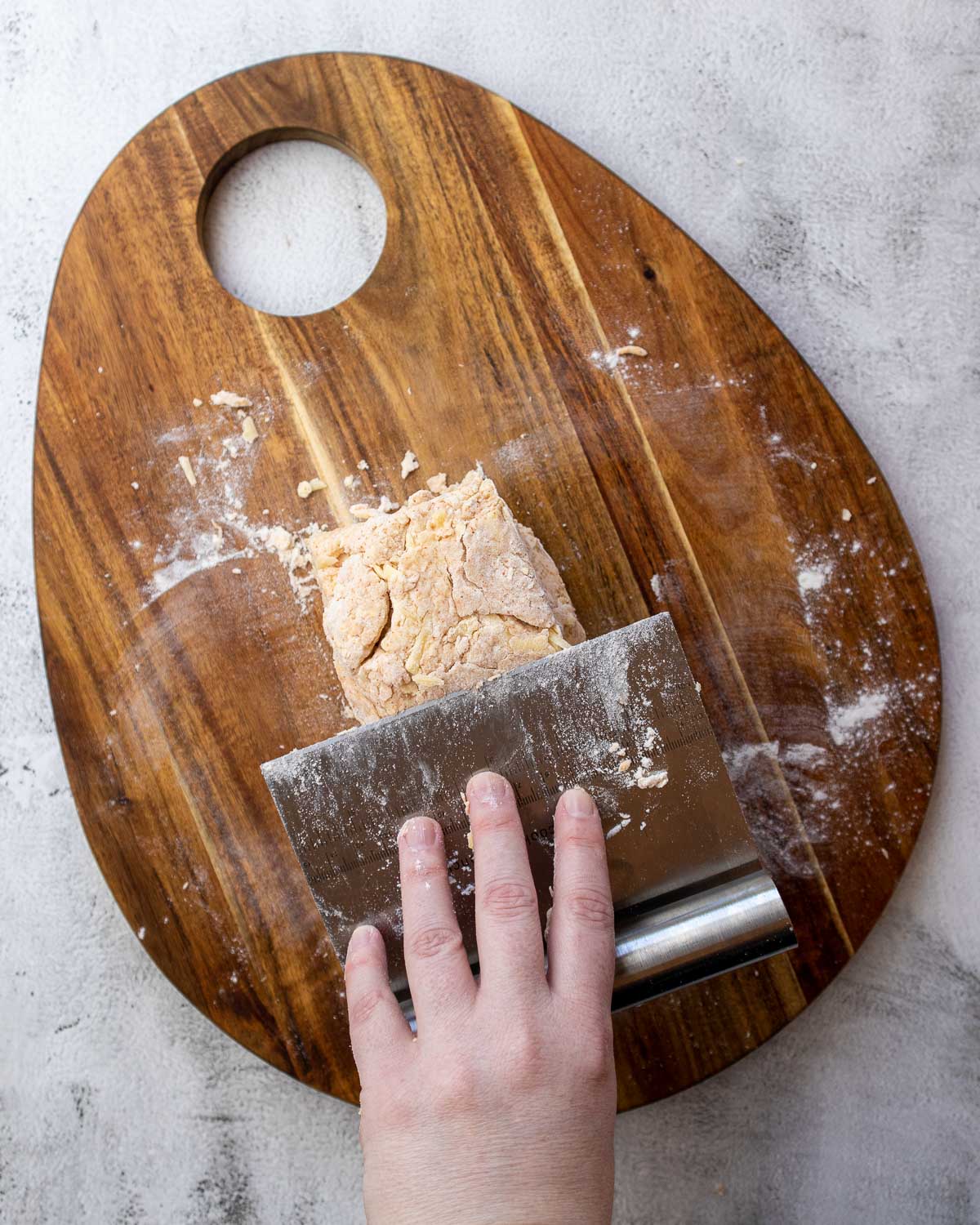
Step 5 - Place the cheese scone dough onto a lightly floured surface. Press the dough into a rectangle. Then using a sharp knife or a bench scraper, cut the dough into thirds and fold the outer edges onto the middle section. Press down using your hands or a rolling pin until the dough is about an inch or 3 cm thick. Repeat this twice.