
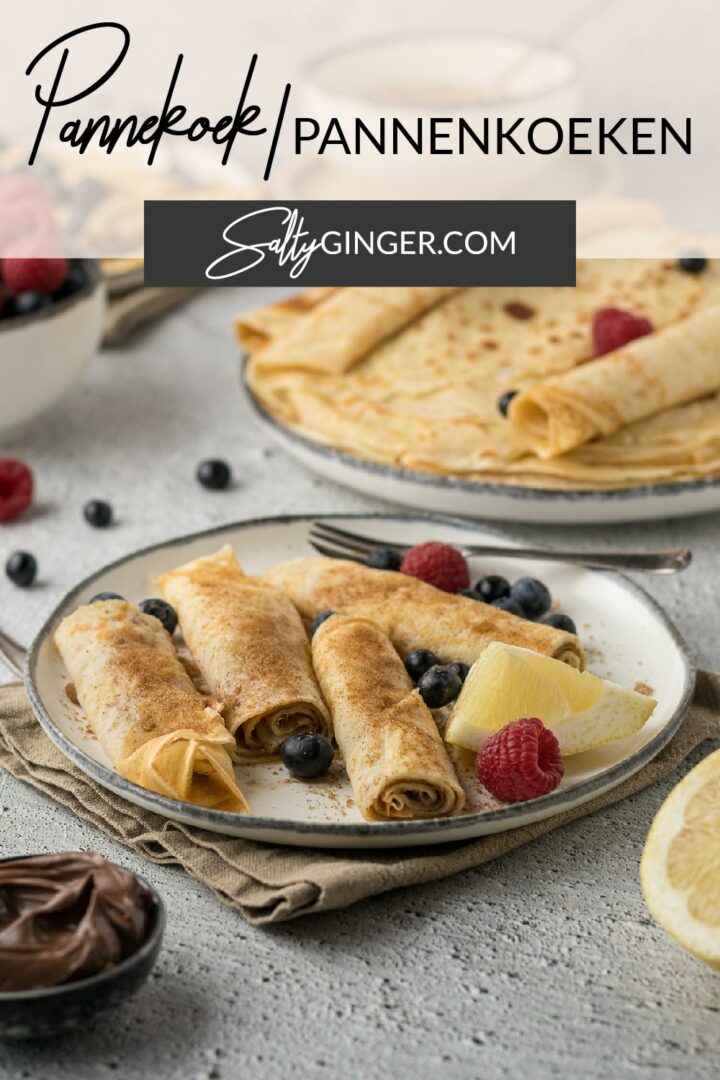
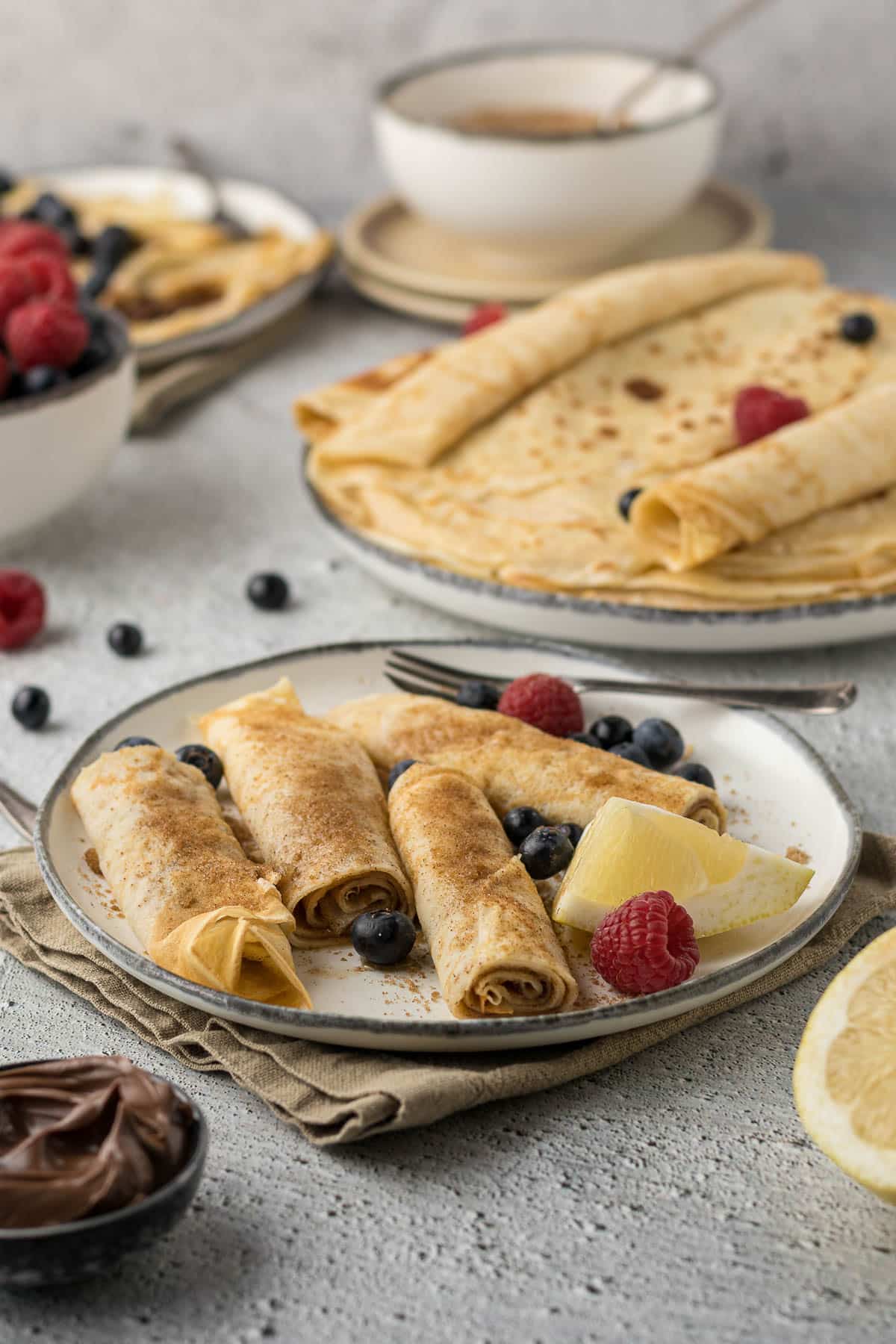
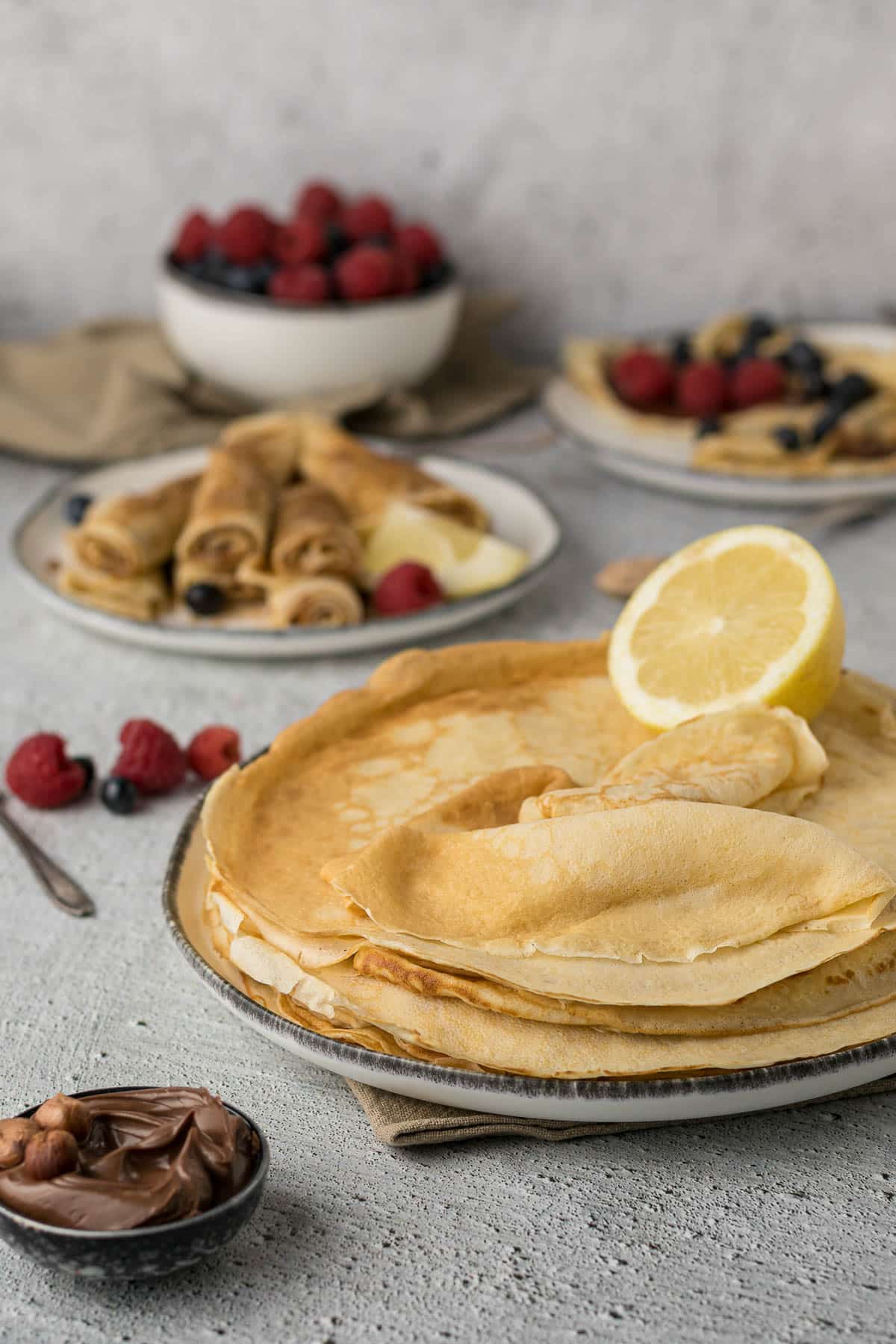
South African pannekoek or pancakes are made with a few simple ingredients and are traditionally served with cinnamon sugar, and sometimes lemon juice.
However, these thin pancakes, similar to French crêpes, can be served with a variety of sweet or savory fillings.
These pannekoek or pannenkoek are the South African or Dutch versions of a French crepe. They are slightly thicker than a crepe and a bit smaller in diameter.
This variation of pancake is found in England, Ireland, the Netherlands, South Africa, and surrounding areas.
Jump to:
- What are South African Pancakes?
- When is Pannekoek Eaten?
- How is Pannekoek served?
- Savory Pancakes?
- Ingredients
- Small-Batch or Double-Batch Pannekoek
- Step-By-Step Instructions
- Expert Tips for This Recipe
- Storage and Freezing
- Pannekoek FAQ
- Other South African Recipes You May Like
- Rate & Review!
- Recipe Card
- Community Comments
What are South African Pancakes?
Pannekoek is specifically the Afrikaans version of a pancake, which is pretty much the same as a Dutch pancake or pannenkoeken, which is a slightly thicker version of a crepe.
But, fluffier pancakes, similar to American pancakes also exist, and these can also be called crumpets, flapjacks, or pancakes. And the only reason I can think this happened is because of the amalgamation of cultures over the years.
A typical pannekoek batter consists of milk, eggs, flour, oil, melted butter, and salt. Some pancake recipes will contain some sugar but this is usually in small quantities. And unlike the fluffier versions of pancakes, crumpets, or flapjacks, they do not contain any leavening agents.
When is Pannekoek Eaten?
Pannekoek are fairly popular in South Africa and are sold at food markets, cafes, coffee shops, outside retail shops on the weekend next to the boerewors stand, at school or church fetes and festivals, farmers market, as well as the local supermarkets and grocery stores.
Pannekoek are also popular on Pancake Tuesday, which is also known as Shrove Tuesday or Fat Tuesday as they prepare for the upcoming Lent.
But pannekoek is also the quintessential comfort food. When a South African announces "this is pancake weather", they mean the weather is gloomy, overcast, cold, or rainy. This weather provokes the mood for comfort food. And what is more comforting than a delicious pancake with a little bit of cinnamon sugar? Well, maybe some melkkos.
How is Pannekoek served?
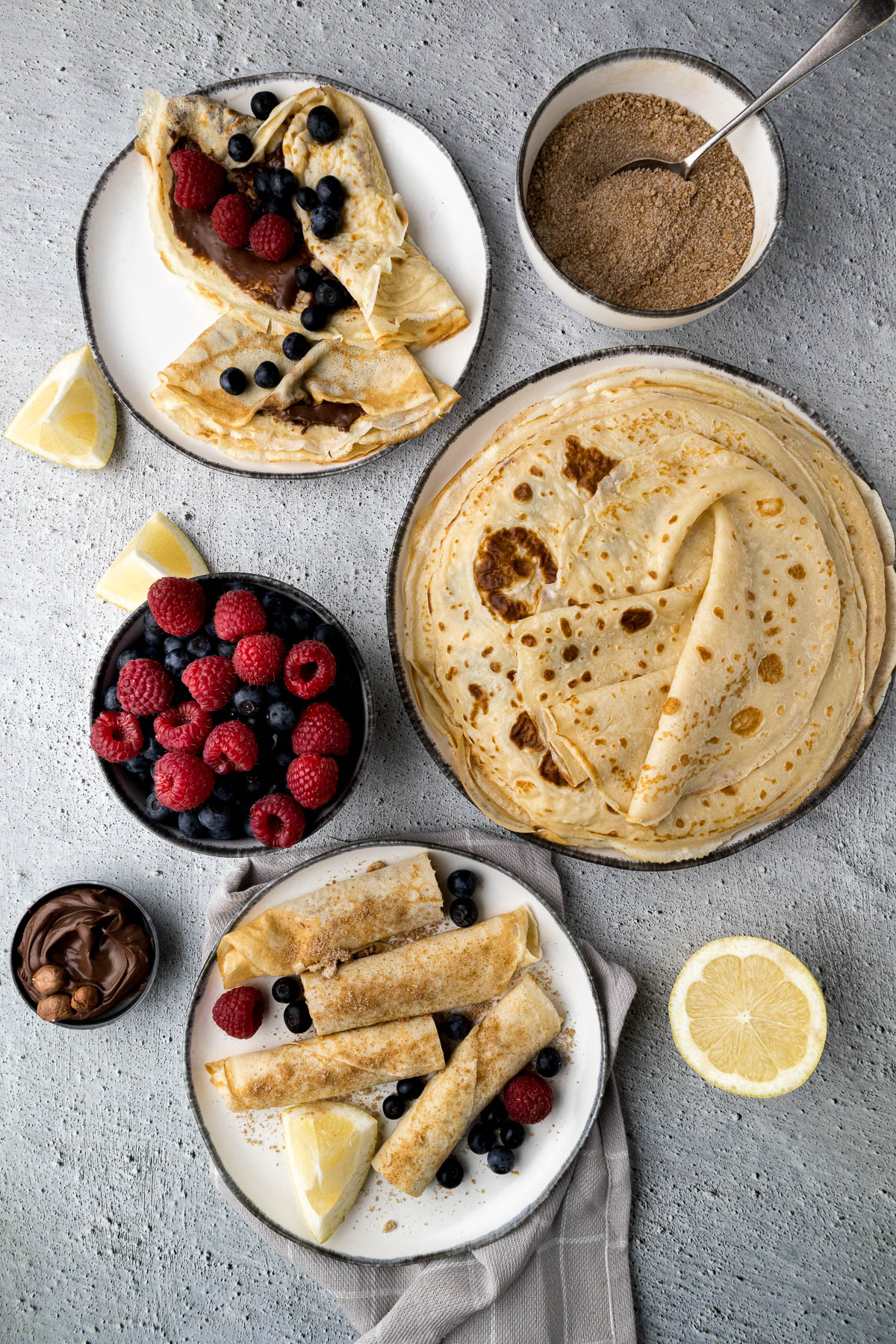
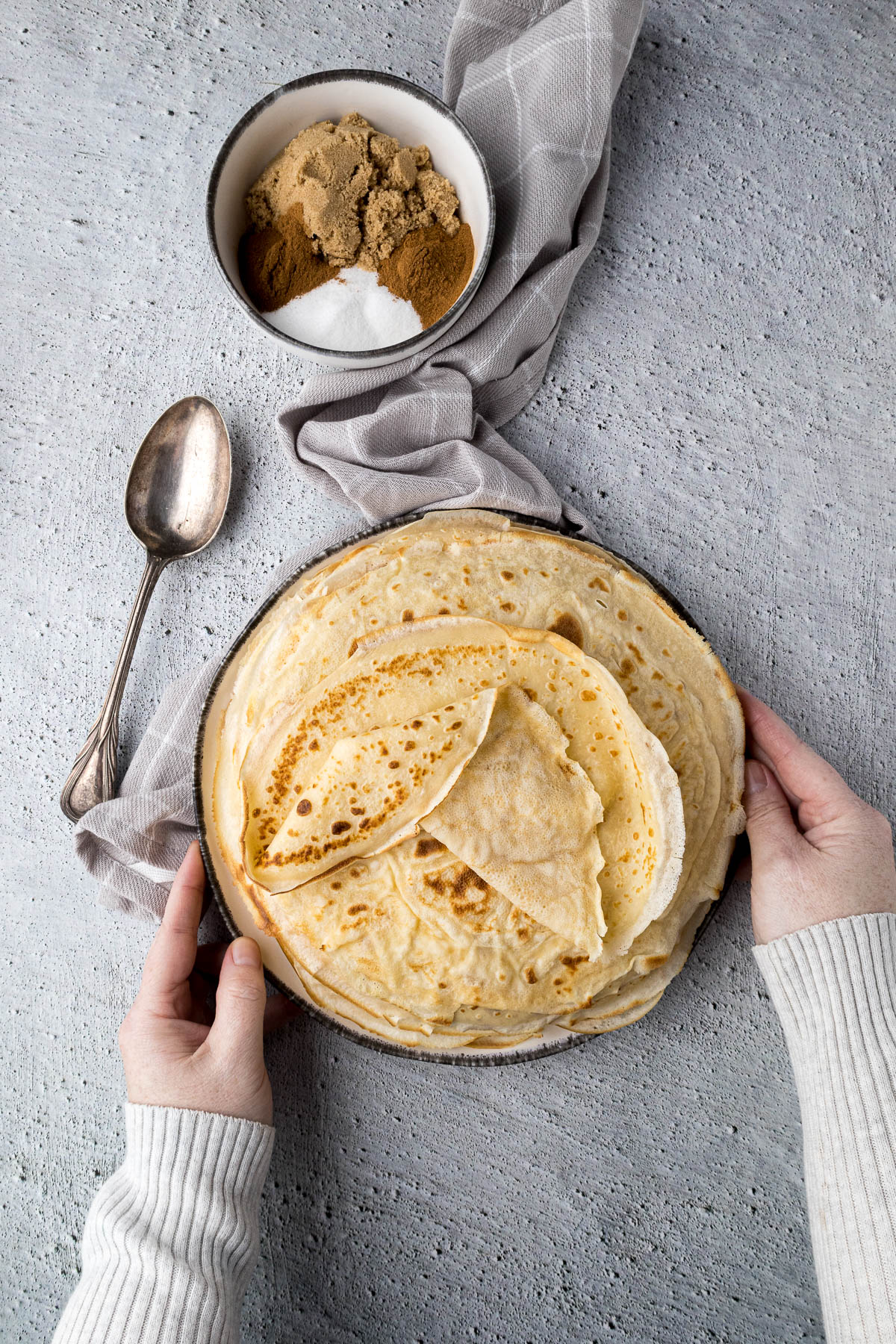
Pannekoek is usually served with a decent sprinkling of cinnamon sugar, sometimes lemon juice. The cinnamon-sugar mixture is spread over the entire pancake and rolled up, which means these can be eaten by hand or with cutlery. They can served any time during the day from breakfast to lunch to a snack between meals.
But because there is no sugar in this batter, the pancake is very versatile. I have been served pancakes with caramel treats (dulce de leche or caramel condensed milk), Nutella, jams, and delicious savory fillings.
Savory Pancakes?
Yes - I love a savory filling in a pancake. Common fillings include - savory mince, bacon, and eggs, or a creamy chicken or mushroom filling.
For a quick and creamy mushroom filling - slice and saute button mushrooms on medium-high heat in a tablespoon of olive oil, until the mushrooms are nicely browned. Season with salt and pepper. Toss the mushrooms with a tablespoon or two of flour, with 2 tablespoons of butter. Slowly whisk in about 2 cups of milk to form a nice thick creamy mushroom sauce!
Ingredients
Here are notes on the ingredients used, please refer to the recipe card for full quantities.
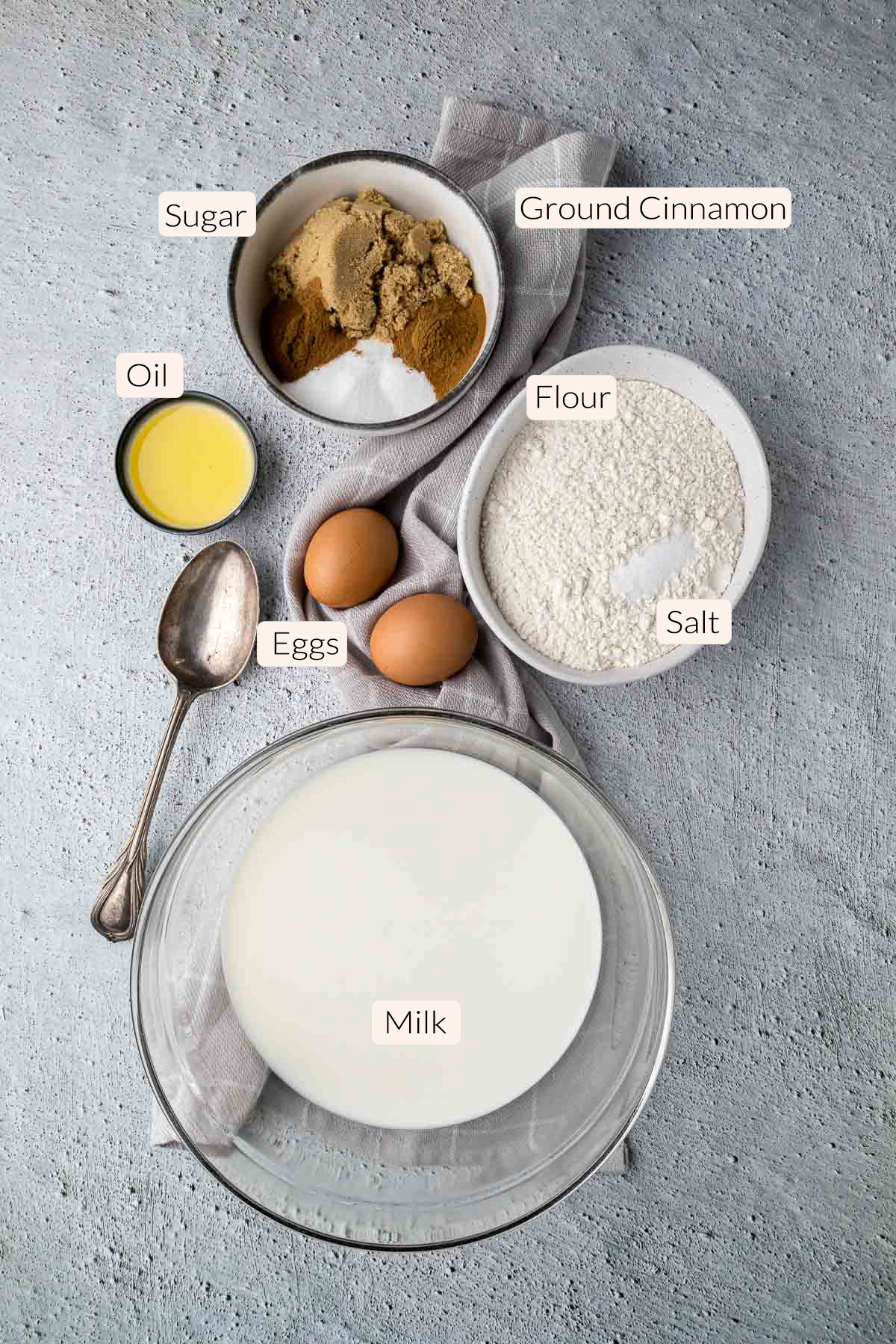
Flour - plain, all-purpose flour, standard-grade flour, or cake flour.
Salt is a crucial ingredient in all baked goods. I use table salt in all my recipes. One teaspoon of table salt equals 1.5 teaspoons of Morton Kosher Salt equals 2 teaspoons of Diamond Crystal.
Milk - I prefer using full-fat or whole milk, however, lower-fat versions can work in a pinch.
Eggs - bind everything together when cooking.
Brown and/or caster sugar(white granulated sugar) - for the cinnamon sugar filling.
Ground cinnamon to flavor the sugar. A little hint of nutmeg would also go down a treat.
Small-Batch or Double-Batch Pannekoek
The full batch of pancakes makes about 12 pancakes. If you only want a small batch of pancakes, simply click on the "½x" button on the recipe card. This would then make about 6 pancakes in total.
For a double batch of about 24 pannenkoeken, click on the "2x" button in the recipe card.
Step-By-Step Instructions
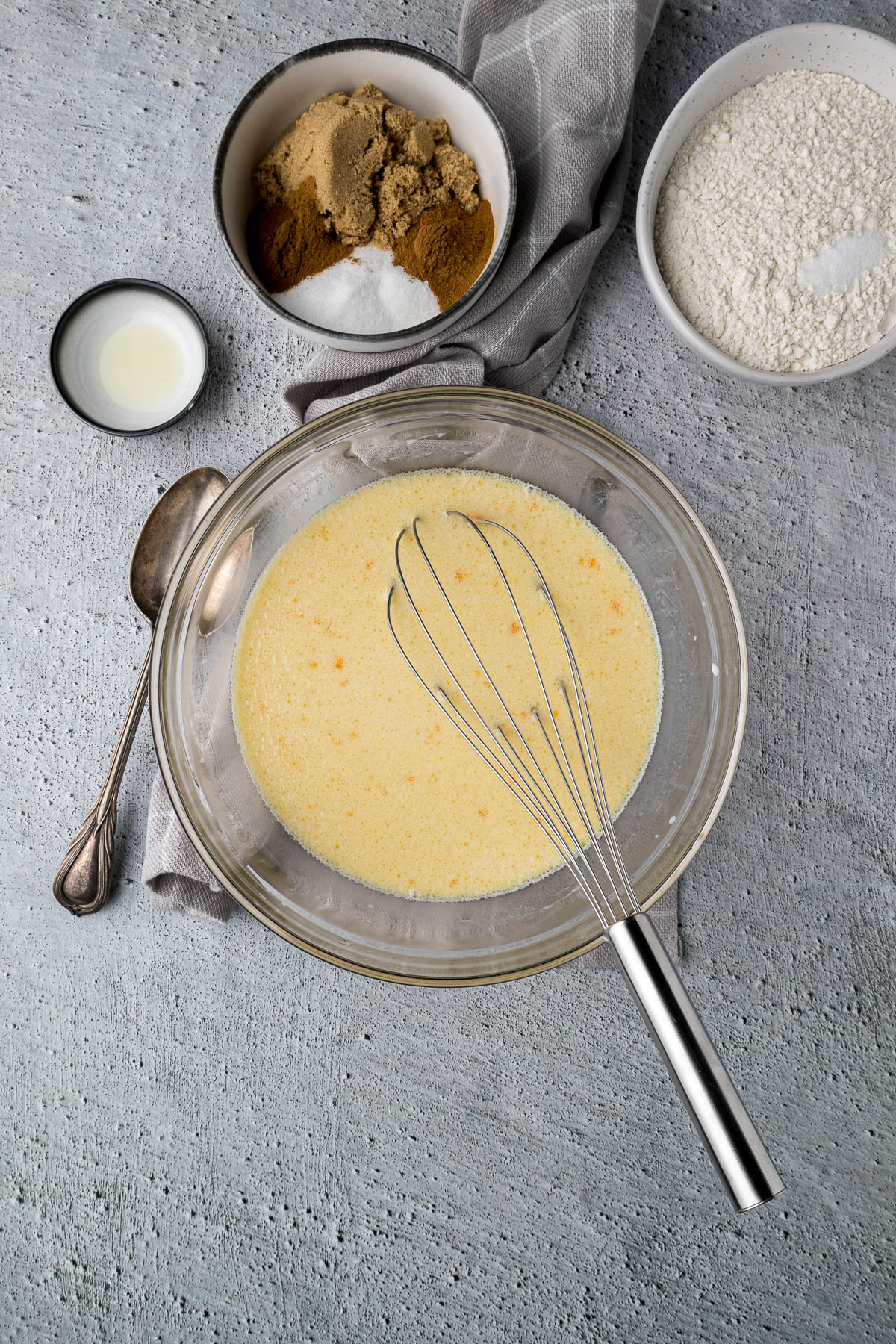
Step 1 - Beat together the eggs, 600 ml (2½ cups) of milk, and oil until well combined.
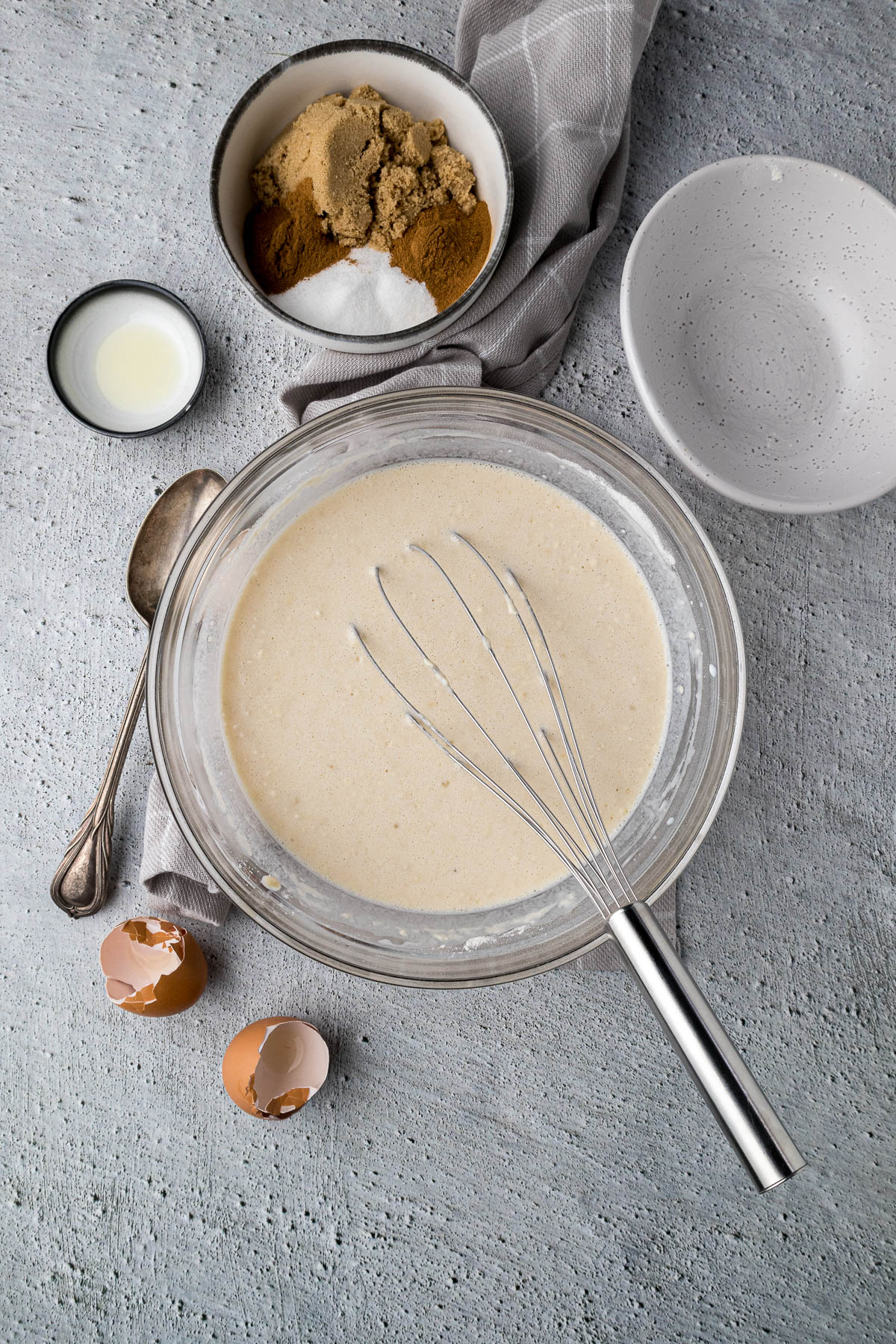
Step 2 - Sieve the flour and salt into a large bowl. Slowly add the milk mixture to the flour, whisking to prevent any clumps from forming. OR - place all the ingredients into a blender and blitz together until a thin smooth batter has formed. Allow the pancake mixture to rest for 30 minutes.
Step 3 - Stir through the pancake batter, if it has thickened up, add some more milk until the batter is back to its pouring consistency.
Step 4 - Heat a non-stick 30cm/12-inch frying pan over medium heat. Using a ⅓ cup measurer, pour the batter into the center of the pan, spreading it to the edges. This can be done by picking up the pan and swirling the batter, or by using a plastic or silicon bench scraper lightly over the surface of the pancake.
Step 5 - Cook on one side until the batter has just become solid, then flip over for another 30 seconds to a minute.
Step 6 - Serve the pancakes with your favorite filling. For traditional pannekoek, combine the sugar and cinnamon sugar, then sprinkle over the entire pancake before rolling up and serving.
Expert Tips for This Recipe
- Cooking pancakes requires a little bit of patience. I like to cook mine over low-medium heat using a non-stick pan. To make sure the batter is evenly spread across the pan, use a plastic or silicone bench scraper to move the batter across the bottom of the pan. When the edges begin to brown, it’s time to flip. Be confident, be swift, be gentle. And if it flops or breaks…it doesn’t matter. It’s still going to taste just as good.
- A good non-stick pan is crucial to making pancakes. Allow the pan to heat up properly before adding the first batch of batter.
- A blender or immersion blender works well to create a smooth batter!
- Let your imagination run wild with filling ideas - cinnamon sugar, Nutella, jams or preserves, caramel or dulce de leche, savory mince or curry mince, creamy mushroom or creamy chicken filling, or some classic bacon and eggs.
Storage and Freezing
For any leftover pancakes I like to store them without a filling, an an airtight container, in the fridge for up to a week.
I then warm up the pannekoek in the microwave for 20-30 seconds or until warm before filling the pancake and serving.
If freezing cooked pancakes, layer the pancakes with parchment paper or baking paper, and place them in an airtight container for up to a month.
Pannekoek FAQ
Pannekoek batter is slighter thicker than a French crepe. But essentially they are very similar.
While the ingredients are very similar, the method of cooking is different. Pannekoek are cooked in a frying pan on the stovetop while a Dutch baby is cooked in a cast iron pan in the oven.
Pannenkoeken or pannekoek do not contain any leavening agents, and the batter is much thinner. The resulting pancakes are also thinner, and generally bigger in size.
I would say they are the same.
Other South African Recipes You May Like
Rate & Review!
If you made this recipe, please leave a star rating! It gives my readers and me helpful feedback. If you want more recipes, subscribe to my newsletter, and follow me on Instagram, Pinterest, and Facebook!