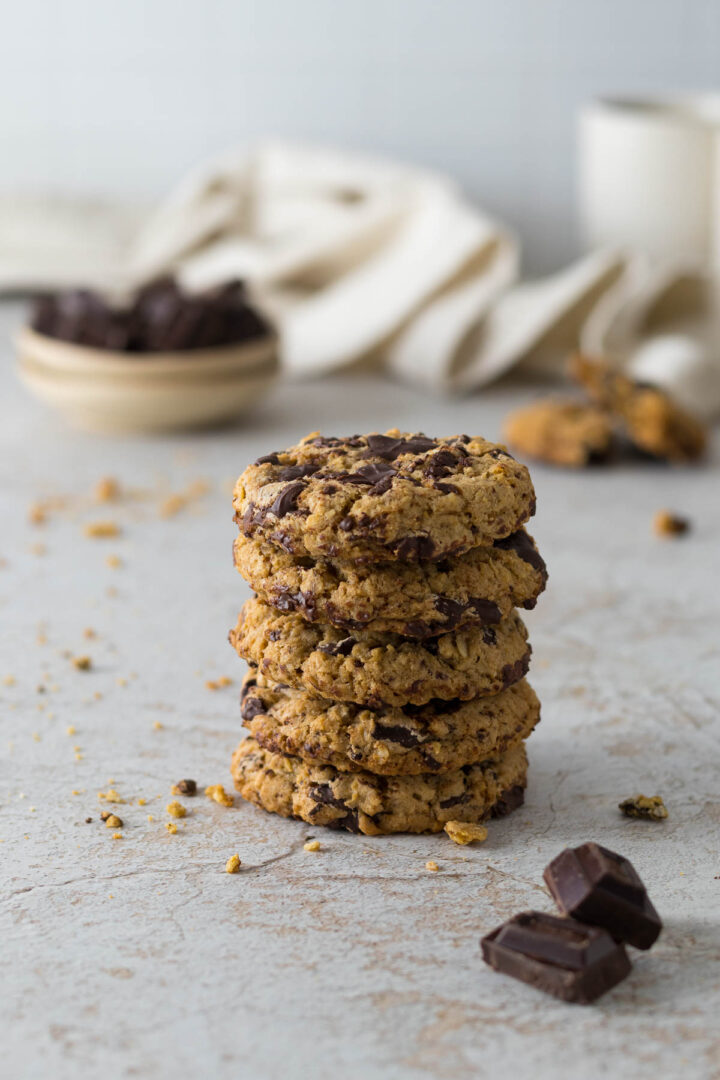
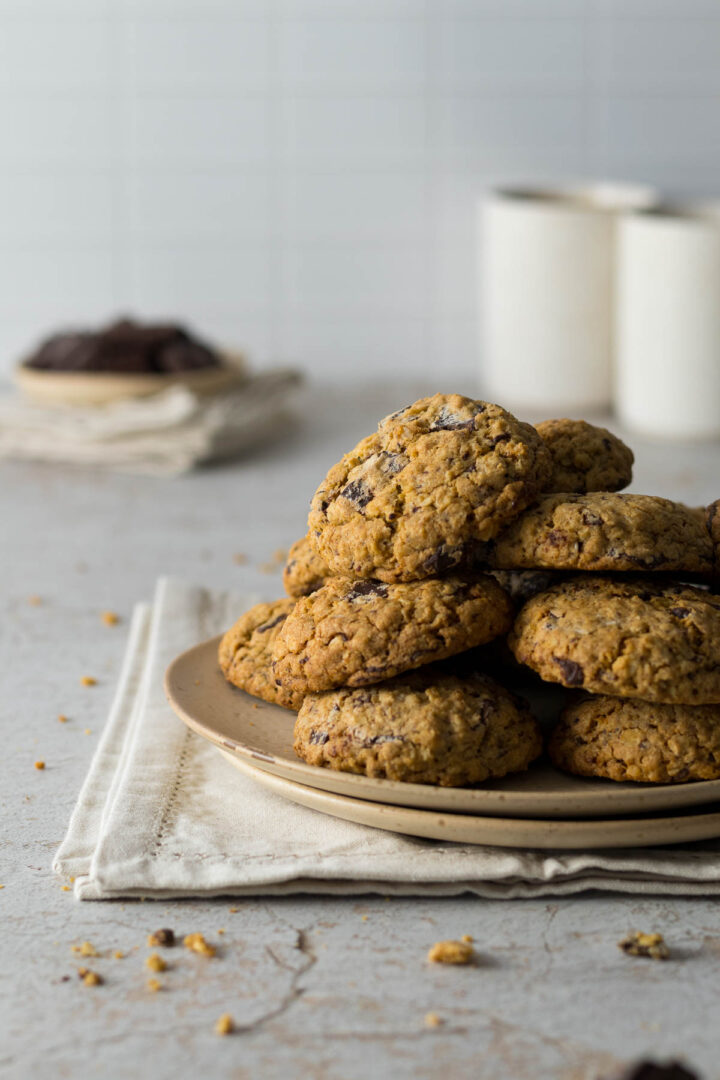
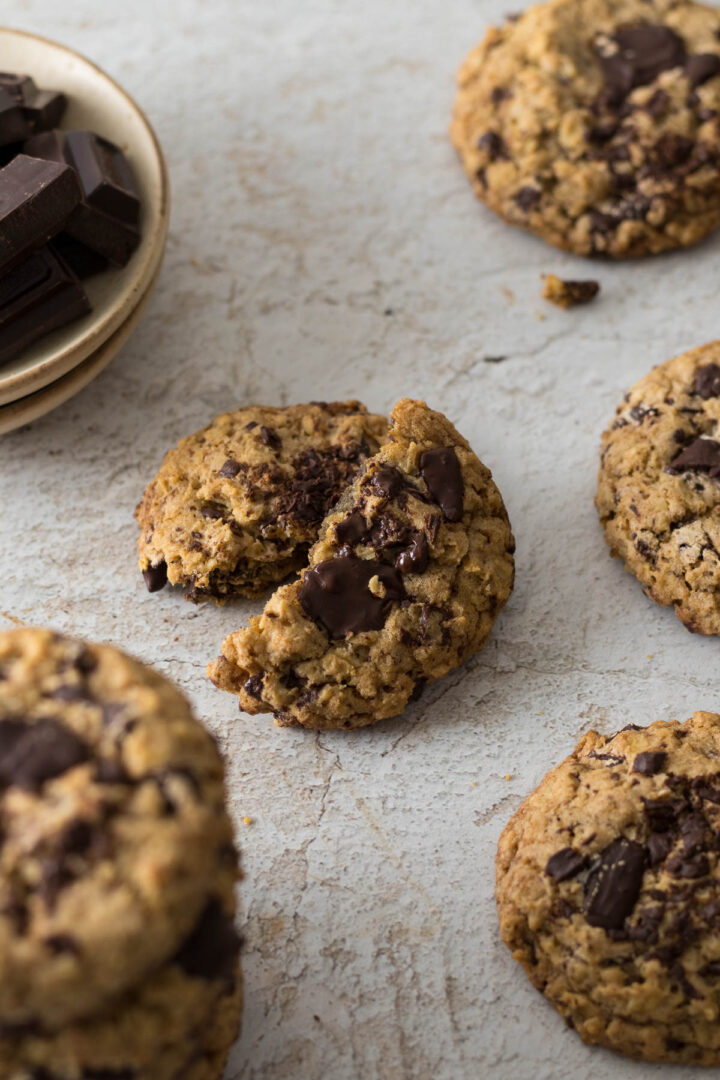

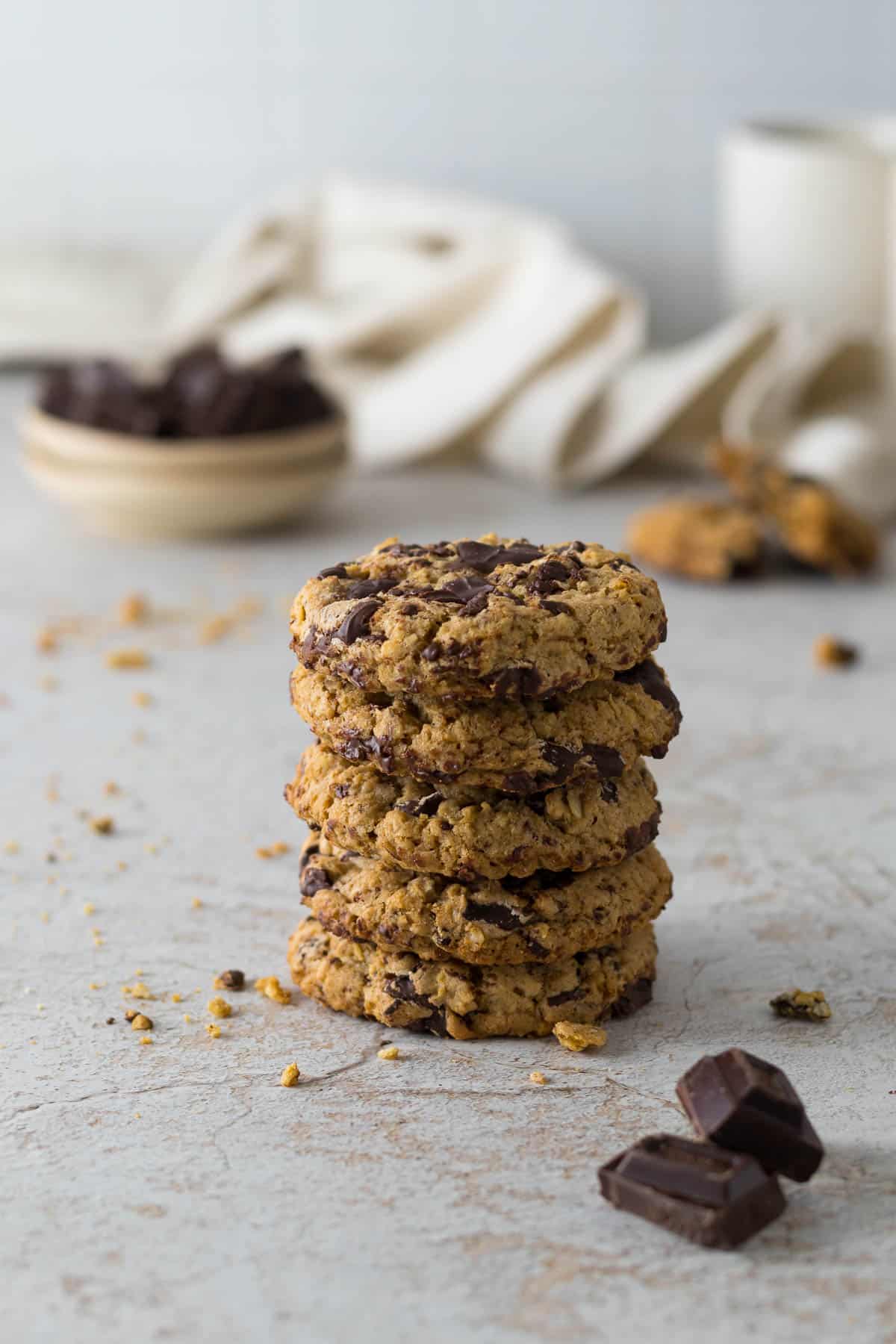
These easy, chewy, thick chocolate chip oatmeal cookies from together fairly quickly from simple ingredients to form a really delicious cookie.
These oat and chocolate chip cookies consist of a simple cookie dough that is flavored with your choice of chocolate chips and that wholesome oatmeal flavor.
This cookie does require a short 20-minute chill time before baking. However, this is the perfect amount of time to preheat an oven, while allowing the cookies to firm up.
You can also freeze the portioned cookie dough, and bake from frozen. Which means you can have a steady supply of oatmeal chocolate chip cookies in the freezer.

Jump to:
Recipe Development
The base for this oatmeal chocolate chip cookie recipe is my chewy vanilla cookies.
When testing these cookies, I also tested baking the cookies after a 20-minute rest period in the fridge, as well as after 24 hours in the fridge, and directly from frozen. All three of these times work, but I do think the flavor was best from the cookies that had been chilled for 24 hours.
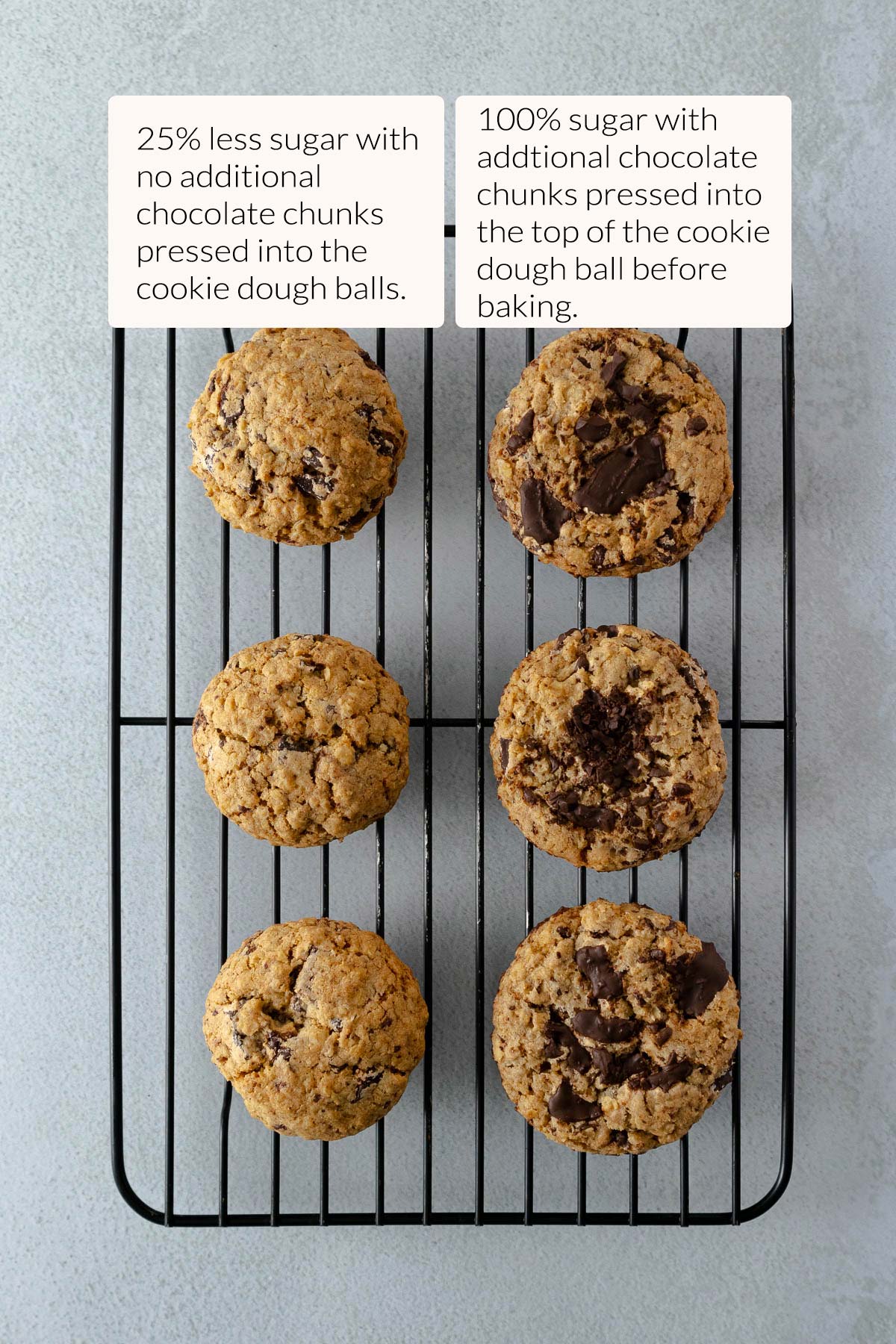
After publishing the oatmeal raisin cookies, I also retested these cookies with a 25% and a 50% reduction. And while they aren't as chewy as the recipe with the full amount of sugar, they are still pretty good.
Ingredient Notes & Substitutions
Here are notes on the ingredients used, please refer to the recipe card for full quantities.
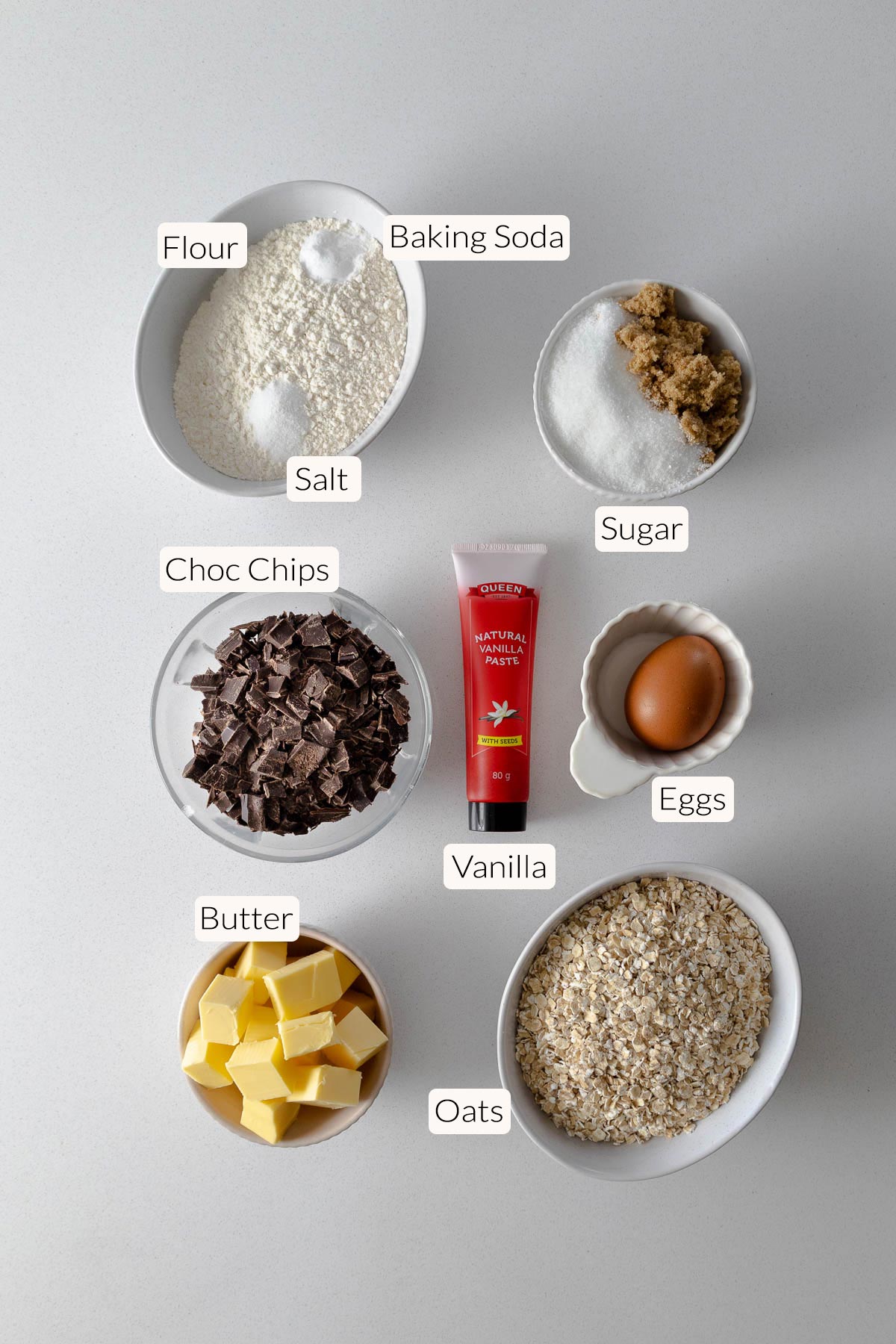
- Plain Flour (standard-grade or all-purpose flour) is used in this chocolate chip oatmeal cookie.
- Salt is really needed to bring out the flavor of the flour and oats. I always use table salt.
- Butter is a key ingredient in terms of flavor, texture, and moisture. I opted for melted butter because honestly, it's just easier. This is why there is a 20-minute chill time in the fridge. However, these cookies taste even better if they are chilled overnight.
- Eggs - I always bake with a New Zealand size 6 egg, which is the same as an Aus/SA large, and a US/Euro medium. Eggs just bind together the cookie dough.
- Light brown sugar (or dark brown sugar) and white granulated sugar add sweetness, moisture, flavor, and aid with the texture and spread of the cookies. I have used what I believe is the least amount of sugar that still results in a soft, slightly chewy cookie. However, I have included notes to decrease the sugar by 25% and 50%.
- Bittersweet or semisweet chocolate chips, which are the same as dark chocolate or milk chocolate chips. Alternatively, you can use chocolate discs, chocolate chunks, or a chopped chocolate bar.
- Oats - I always have basic rolled oats in the house and they are my go-to for any baking. Rolled oats are also known as old-fashioned oats. You can get away with steel-cut oats, but I haven't tested and don't recommend using the instant-type varieties that only require the addition of boiled or hot water.
- Vanilla extract compliments and brings out the flavor of the rest of the ingredients.
- Baking soda is used as a leavening agent and helps the cookies spread out during the process, as well as helping them brown nicely.
Reduced-Sugar Variation
I first developed this recipe, with what I think is the least amount of sugar required for a chewy chocolate chip oatmeal cookie. And honestly, I still do. However, after receiving some feedback for my oatmeal raisin cookies, I decided to test out a 25% less sugar, and a 50% less sugar version.
- 25% less sugar- 165 grams (¾ cup) of brown sugar, and 75 grams (⅓ cup)of white sugar.
- 50% less sugar- 110 grams of brown sugar (½), and 50 grams (¼) of white sugar.
Then of course, if you stick to bittersweet or dark chocolate, you will reduce the overall sugar content as well.
Small-Batch
For a half-batch or small batch of cookies, simply click on the "½" button on the recipe card, and follow the instructions. If you are opting for a reduced-sugar variation, you will have to half those values manually.
Step-By-Step Instructions
Note - I used a chopped Whittaker's 50% dark chocolate bar for the cookies photographed in this post. I also chopped up a few extra pieces to dip the cookie dough balls in before I chilled them and baked them.
Step 1 - In a large mixing bowl, whisk together the flour, oats, salt, baking soda, and chocolate chips.
Step 2 - In another bowl, combine the melted butter and sugar. Whisk vigorously until the sugar is mostly dissolved. Set aside for 5 minutes to cool.
Step 3 - Add in the vanilla and eggs. Whisk vigorously to combine fully.
Step 4 - Pour the wet ingredients into the dry ingredients. Using a wooden spoon or rubber spatula, mix the cookie dough until all the flour is incorporated and a soft cookie dough forms.
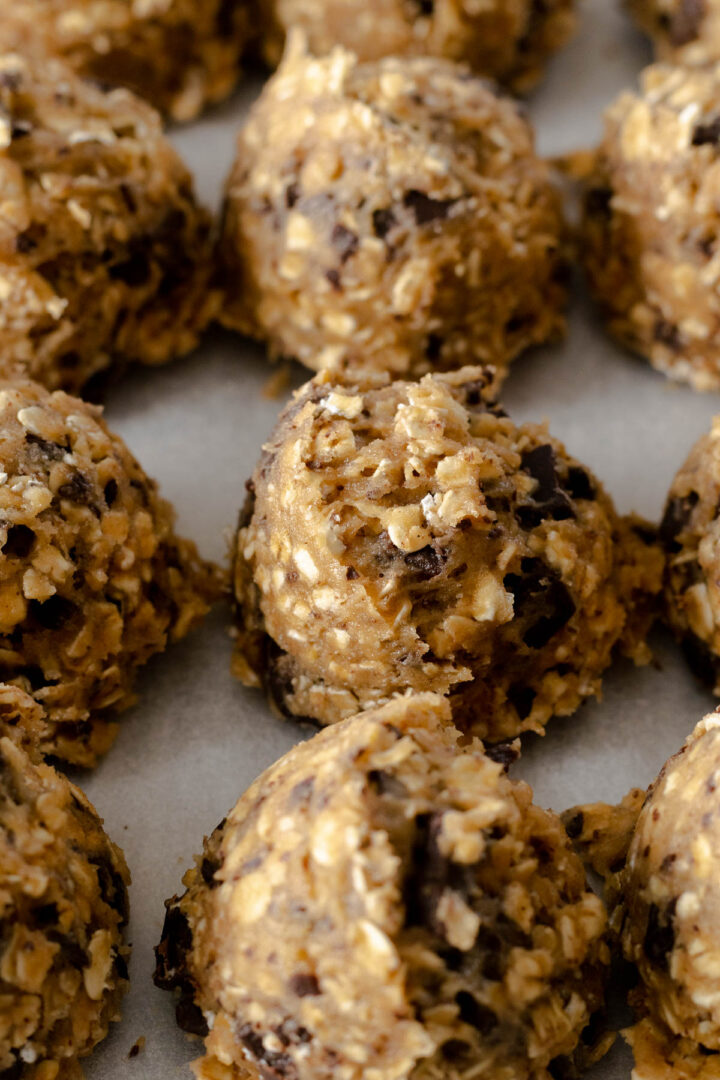
Top Tip - The cookie dough may initially look a bit too soft, but as the dough stands the butter will become more solid, and the oats and flour will absorb the moisture in the cookie dough.
Step 5 - Line a baking tray or plate with baking paper or parchment paper. Portion the cookie dough out into 2 tablespoon-sized balls. Roll the cookie dough balls until round. Cover with cling-film or plastic wrap and pop into the fridge. Alternatively, you can line an airtight container with baking paper, and place the cookie dough balls into the container.
Top Tip - If you have opted for a reduced-sugar option for this cookie, you may want to press the dough balls to about 1cm tall before chilling them. As the cookies will spread less than the 100% sugar version.

Step 6 - Let the cookie dough balls rest in the fridge for at least 20 minutes to 24 hours.
Step 7 - Preheat the oven to 180°/350°F (160°C fan) - this will take about 20 minutes. Line a baking tray or two with baking paper or parchment paper.
Step 8 - Place the chilled cookie dough balls on the baking tray about 2 to 3 inches apart. Bake for 15 to 20 minutes. My cookies were done at the 17-minute mark.
Step 9 - Allow the cookies to cool on the baking tray for 5 minutes before lifting them gently onto a wired cooling rack to cool completely.
Top Tip - use a large cookie cutter or bowl to scoot around the edges of the hot cookies for the perfect round cookies. And top them with a few more chocolate chips for decoration.
Expert Tips for This Recipe
- The cookie dough may feel very soft, but resting the dough in the fridge will harden up the butter, and allow the flour and oats to absorb some moisture.
- The cookie dough must rest for at least 20 minutes in the fridge, but the flavor really improves after a nice 24-hour rest.
- If using a fan-assisted, convection, or air-fryer, reduce the temperature by 20°C/25°F
- Preheat the oven properly before baking the cookies. This will take about 20 minutes.
- Remember that all ovens work slightly differently and bake times may need to be adjusted for your specific oven.
- Have a peep at the cookies at the 15-minute mark to gauge if they need an additional 2 to 5 minutes.
Storage and Freezing
Store the baked cookies, once completely cooled, in an airtight container for up to a week.
Baked, cooled cookies can be frozen in an airtight container for up to 3 months.
Portioned cookie dough balls can be stored in an airtight container for up to 3 months. To bake, preheat the oven and bake from frozen. You may need to add 2 to 3 minutes to the baking timing.
Chocolate Chip Oatmeal Cookies FAQ
Yes. You can freeze either the baked cookie or portioned cookie dough balls. You can bake the frozen cookie dough from frozen in a preheated oven, you may need to add a minute or three to the baking time.
Yes, you can add up to 1½ tablespoons of ground cinnamon to these cookies.
Yes. Refer to my reduced-sugar section for a guide on reducing the sugar by 25% and 50%.